Design-Build Services Explained

Table Of Contents
Share

Design-build is a construction project delivery method where a single entity (the design builder) handles both architectural design and physical construction under one contract with the project owner.

Instead of hiring an architect first, completing all drawings, and then bidding the work out to separate contractors, the owner works with one integrated team from day one. The team designs, and builds. This fundamentally changes how construction projects flow, who’s responsible for what, and how problems get solved.

Why does this matter? According to DBIA and industry research, design build is projected to approach roughly half of U.S. non-residential construction spending by the late 2020s. Nearly half of large-scale commercial and institutional projects now use this method. A dramatic shift from just a decade ago.

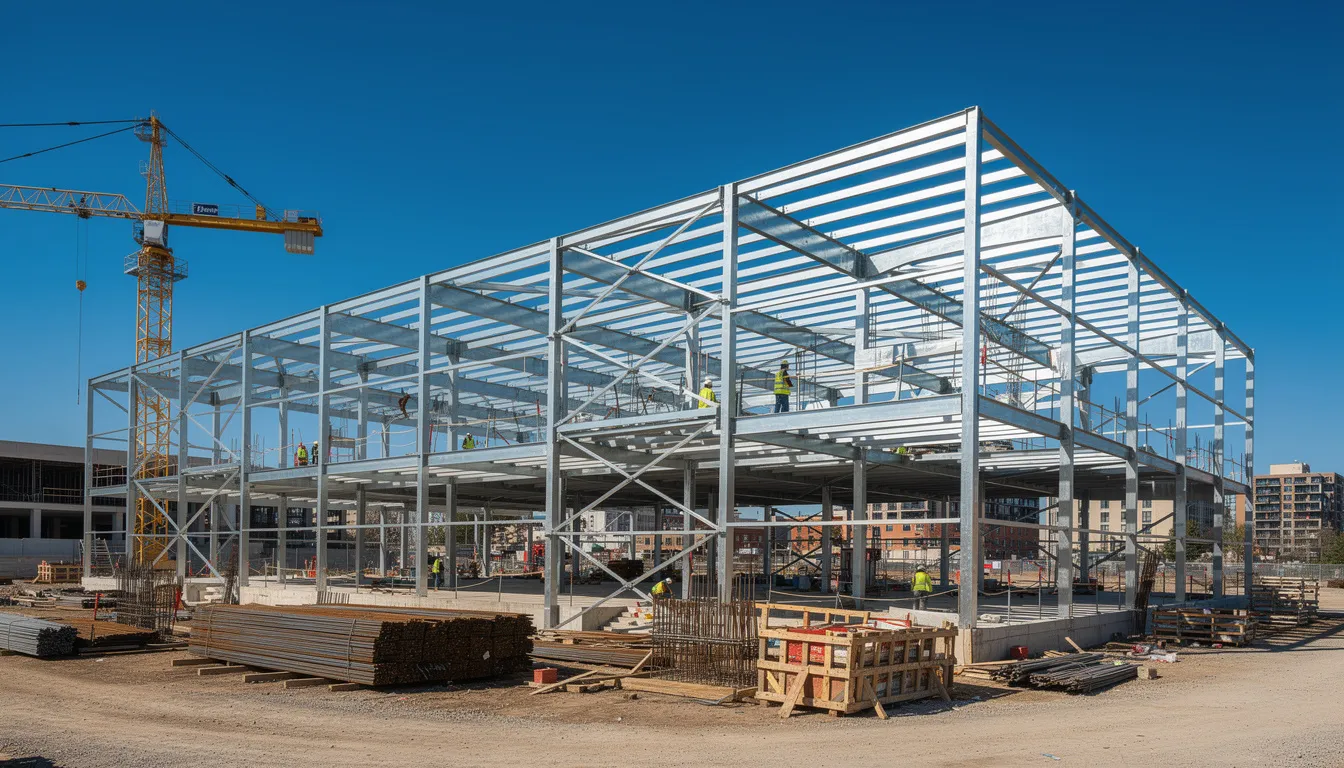
A modern commercial building is under construction, showcasing its steel framework against a clear blue sky, highlighting the construction process and the collaborative efforts of the design build team. This image reflects the innovative solutions and project delivery methods used in contemporary construction projects.

Compare this to the traditional design bid build approach, where owners sign separate contracts with designers and builders. In design bid build, the architect completes a full set of drawings before any contractor sees the project. Then contractors bid on those completed documents, often identifying problems or cost issues only after design is locked in.

This linear handoff creates natural friction: designers and builders have different contracts, different incentives, and limited opportunity to collaborate. When something goes wrong, finger-pointing between parties is common.

Design-build eliminates this by putting architects, engineers, and contractors on the same team from the start. A typical design build team includes:

  • The owner who defines goals, approves key decisions, and funds the project
  • The design build firm which houses both architects and engineers who design the project and contractors who build it
  • Key consultants such as structural, mechanical, and electrical engineers
  • Subcontractors and suppliers coordinated by the design builder rather than managed separately by the owner

All parties involved work as one coordinated project team, solving problems together rather than defending their individual contracts.

How the Design-Build Process Works

The design build process moves through overlapping, collaborative phases rather than the strictly linear sequence of traditional methods. This overlap is where much of the time savings and cost savings come from. The construction team can begin site preparation while final design details are still being refined, and the design team can adjust plans based on real-time feedback from builders.

Technology plays a significant role here. Building Information Modeling (BIM), virtual design tools, and project management software allow the design and construction teams to visualize the entire building in 3D, catch conflicts between systems early, and coordinate work before anyone breaks ground.

Here’s how the typical design build process unfolds across six key stages:

1. Project Vision, Feasibility & Site Selection

Before any design work begins, the owner defines what success looks like. This means documenting business drivers: When does the building need to open? How much space is required? What operational needs must the facility support? What’s the realistic budget range?

During the pre construction phase, the design build team often assists with site selection and feasibility analysis. This includes:

  • Zoning reviews to confirm the intended use is allowed
  • Geotechnical reports assessing soil conditions and foundation requirements
  • Environmental assessments identifying potential contamination or protected areas
  • Utility infrastructure analysis
  • Code compliance reviews (especially important before 2026 code changes take effect)

Owners should come prepared with clear business drivers. For example: “We need occupancy by Q4 2027 to meet our expansion timeline” or “The facility must support 200 employees with room to grow to 350.”

2. Preliminary Design & Conceptual Pricing

With feasibility confirmed, architects and engineers create preliminary design concepts while estimators develop preliminary drawings and rough cost ranges. This happens simultaneously—a fundamental difference from traditional methods where design completes before any pricing feedback.

The collaborative nature of this phase means:

  • Architects propose layouts and massing options
  • Engineers evaluate structural and mechanical systems
  • Contractors provide real-time cost feedback on material choices
  • The team uses BIM and virtual design tools to test options quickly and catch conflicts (like a structural beam conflicting with ductwork) before they become expensive problems

Decisions made during preliminary design have the biggest impact on total cost and project schedule. Choosing between a steel frame and concrete structure, for instance, affects not just construction costs but also schedule, long-term maintenance, and building flexibility.

3. Selecting and Contracting with the Design-Build Team

Owner selection of the design build contractor typically happens based on qualifications and value rather than lowest bid alone. This is a crucial distinction from design bid build, where the lowest-cost contractor often wins regardless of other factors.

The result is typically a single contract covering both design and construction, with clear roles, decision rights, and communication expectations. This design build contract structure is negotiated after team selection based on project specifics.

4. Detailed Design & Preconstruction Planning

With the design build team under contract, the complete design development begins. Conceptual layouts evolve into detailed drawings and specifications. Simultaneously, the construction team refines schedules, phasing plans, and procurement strategies.

Key activities during this design phase include:

  • Constructability reviews: Builders evaluate drawings for potential field challenges before they materialize on-site
  • Value engineering workshops: The team identifies smarter material and system choices that maintain or improve performance while reducing cost
  • System comparisons: Detailed analysis of options (steel vs. concrete, different HVAC approaches, lighting systems)
  • Permit preparation: Documentation assembled for building department review

Long-lead items like electrical gear, elevators, or specialty materials may be pre-ordered before final drawings are complete. This protects the project schedule from supplier delays—an innovative solution enabled by the integrated team structure.

5. Construction & Ongoing Design Support

With permits in hand and major materials ordered, the construction phase begins. The same team that designed the project now builds it. This creates complete continuity and accountability that’s impossible when designers and builders are under separate contracts.
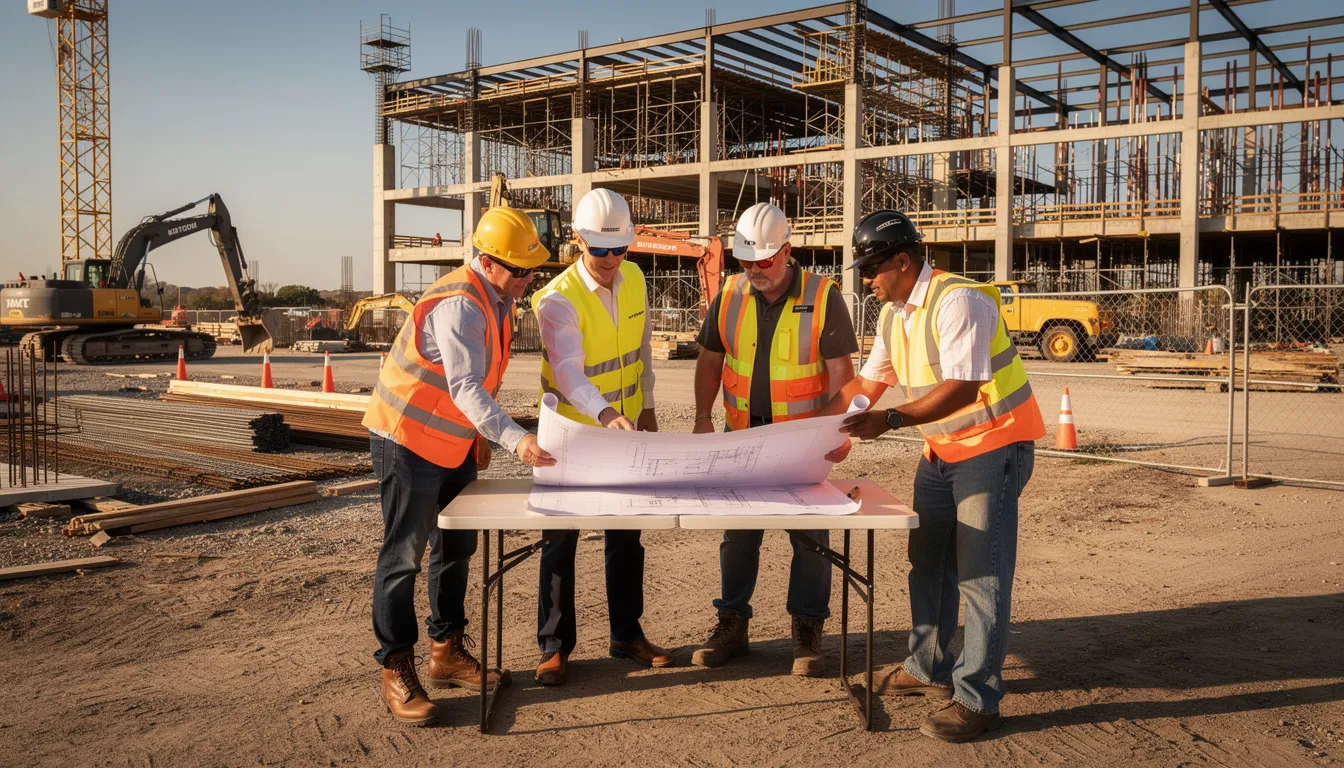
A group of construction workers and supervisors are gathered at an active job site, intently reviewing plans and preliminary drawings. This collaborative effort reflects the design build process, emphasizing the importance of communication and teamwork in achieving the project’s goals efficiently.

Overlapping late-stage design tweaks with construction activities is a key reason design build often finishes months earlier than design bid build. Minor design adjustments can happen in real-time rather than triggering formal change orders and schedule delays.

Typical owner touchpoints during construction include:

  • Weekly or biweekly progress meetings
  • Cost and schedule updates (often via digital dashboards from project management software)
  • Site walks to observe progress
  • Timely decisions on owner-selected finishes and equipment

6. Commissioning, Handover & Post-Construction Support

As construction wraps up, the design builder tests all systems, completes punch list items, and trains owner staff on building operations. Because one firm handled the entire process, the post construction handover is typically much more streamlined than when designers and builders worked separately.

Standard deliverables in late 2020s U.S. projects include:

  • As-built drawings reflecting actual construction
  • Operations and maintenance (O&M) manuals
  • Warranty documentation
  • Instructional videos and training sessions for building systems
  • Final inspections and certificates of occupancy

A defined warranty period and post-occupancy review (typically 6–12 months after completion) help ensure performance requirements are met. Issues discovered during this period are the design builder’s responsibility to resolve.

Key Benefits of Design-Build (Why Owners Choose It)

Multiple independent studies, including research from the Design-Build Institute of America (DBIA), consistently show that design build projects experience lower cost growth, fewer change orders, and faster delivery compared to design bid build. These aren’t marginal improvements, they’re substantial differences that directly impact business outcomes.

The core benefits break down into five categories:

  • Speed: Overlapping phases and early procurement reduce total project duration
  • Cost control: Continuous budget feedback prevents expensive redesigns
  • Risk reduction: Single entity accountability eliminates finger-pointing
  • Collaboration: Unified teams find innovative solutions impossible under adversarial structures
  • Simplified project management: One contract, one partner, less owner coordination burden

Let’s examine each in detail.

Speed & Schedule Reliability

Design build projects typically finish faster because phases overlap rather than waiting for predecessors to complete. While traditional design bid build requires finished drawings before contractor selection, design build allows early procurement, site preparation, and foundation work while detailed design continues.

Industry trendlines confirm this advantage. By 2026–2028, nearly half of U.S. construction spending will use design build, largely because of time savings on the project schedule.

Cost Control & Value for Money

Integrating estimators, designers, and builders from day one keeps the design aligned with budget throughout development. Every design decision gets immediate cost feedback rather than a pricing surprise after design is complete.

Value engineering happens naturally in this environment. The team continuously evaluates alternatives:

  • Can a different structural system achieve the same performance at lower cost?
  • Are there material substitutions that improve durability while reducing construction costs?
  • Can prefabricated components reduce field labor and schedule?

While design build often skips the traditional “low-bid” contest, total lifecycle costs (construction plus long-term operation) are typically lower because the team optimizes for overall value rather than just first cost.

Single Point of Accountability & Simpler Management

Perhaps the clearest advantage of the design build method is simplified project management. The owner signs one contract and deals with one primary partner who manages all designers, subcontractors, and suppliers.

This structure eliminates the “not my problem” response. When issues arise they’re the design builder’s project responsibility to resolve internally. There’s less room for finger-pointing when one entity owns both the design and construction.

For lean internal teams, this benefit is substantial:

  • Fewer meetings to attend
  • Less coordination burden on owner staff
  • More time to focus on core business operations
  • Better communication through a single point of contact

Collaboration, Innovation & Quality

Bringing architects and engineers together with builders early encourages innovative solutions that wouldn’t emerge under adversarial structures. When the construction manager participates in design meetings, they can suggest:

  • Alternative structural systems that are faster to build
  • Modular components or prefabrication that reduce field labor
  • Construction methods that improve quality while cutting costs
  • Material choices that perform better in real-world conditions

Design build environments often adopt modern tools and lean construction methods that improve quality and reduce waste. For example, integrating energy modeling early in design can achieve better long-term energy efficiency without major cost increases—because the team optimizes systems together rather than in isolation.

Risk Shifting & Reduced Claims

A core advantage of design build is shifting coordination and design risk from the owner to the design build firm. The design builder must solve problems internally rather than through disputes and claims against other project delivery methods.

This doesn’t eliminate all risk (no delivery method does) but it consolidates risk with a single party contractually responsible for solving problems. The result:

  • Fewer claims related to design errors
  • Fewer change orders from design-construction misalignment
  • Faster resolution when issues do arise
  • Fewer claims and less litigation overall

Owners should still maintain due diligence: clear performance criteria, defined scope, and appropriate contractual protections. But with design build construction, the fundamental structure reduces conflict rather than creating it.

Design-Build vs. Other Delivery Methods

Design build is one of several major project delivery methods, and it’s not automatically the right choice for every project. Understanding how it compares to other construction methods helps owners make informed decisions based on their specific circumstances.

Design-Build vs. Design-Bid-Build (DBB)

Design bid build is the traditional approach where the owner first contracts with an architect to develop complete design documents. Only after drawings are finished does the owner bid the work to contractors, typically selecting the lowest-cost proposal.

Factor

Design-Build

Design-Bid-Build

Contracts

Single contract with one entity

Separate contracts with designer and builder

Contractor involvement

From project start

After design is complete

Design error responsibility

Design builder

Often disputed between designer and contractor

Schedule

Overlapping phases

Sequential (design → bid → build)

Change order frequency

Lower

Higher

Design bid build can make sense when lowest bid is legally required (common in some public projects) or when owners want completely separate design advocacy before construction pricing. However, many private owners in the 2020s have switched from DBB to design build for complex or fast-track design build projects precisely because of the schedule and coordination advantages.

Design-Build vs. Construction Manager at Risk (CMAR)

Construction Manager at Risk (CMAR) is a hybrid approach. The owner contracts separately with a designer and with a construction manager who provides early input during design, then guarantees a maximum price and manages construction.

CMAR provides early contractor input (like design build) but maintains separate contracts (like design bid build). This creates more room for design-construction misalignment than a true design build approach.

Typical CMAR advantages:

  • Clearer upfront pricing through the guaranteed maximum price
  • Appeal for large institutional owners with strong internal project managers
  • Familiar structure for public entities transitioning from DBB

Design-build advantages over CMAR:

  • Stronger integration under one entity
  • Fewer relationships to manage
  • Less potential for finger-pointing between designer and contractor
  • Cleaner accountability for the owner

For owners who want fewer contracts and less coordination burden, design build typically offers a simpler path.

When Design-Build Is (and Isn’t) the Right Choice

Matching delivery method to project specifics (size, complexity, schedule, risk tolerance, and internal capacity) determines success. Design build excels in certain situations but isn’t universal.

Project Types That Benefit Most

Design build shines for:

  • Tight deadlines: Projects needing occupancy by a specific date (e.g., opening before Q4 2027 for a planned expansion)
  • Complex systems: Healthcare facilities, laboratories, or industrial buildings where design and construction integration prevents costly errors
  • Performance-based goals: When outcomes (energy efficiency, operational capacity) matter more than prescriptive specifications
  • Limited owner staff: Organizations without dedicated construction expertise benefit from a single point of contact

Sectors that commonly choose design build:

  • Commercial offices and multi-tenant buildings
  • Healthcare facilities and medical office buildings
  • Logistics and industrial projects
  • Higher education buildings
  • Multi-family residential and mixed-use developments
  • Renovation and expansion work where unknowns are common

Projects with tight market windows like opening before a major event, aligning with academic calendars, or meeting lease commitments, benefit greatly from the time savings design build provides.

In a modern conference room, business professionals are collaboratively reviewing project documents, emphasizing the importance of the design build process in construction projects. The scene highlights the need for effective communication and teamwork among design and construction teams to ensure the project's goals are met efficiently.

Frequently Asked Questions

How much time does design-build typically save compared to traditional methods?

On mid-size commercial construction projects ($5M–$25M), the design build method often saves 3–6 months compared to design bid build. The biggest advantage comes from overlapping the design phase and construction phase, which allows site work and early construction to begin before the complete design is finished. For owners with fixed deadlines, this project delivery approach can be the difference between opening on time or missing key business milestones.

When should owners bring in a design-build team?

The best time to engage a design build team is during the pre construction phase, often while site selection and feasibility are still underway. Early involvement allows the design builder to align architectural design, budget, and schedule around the project’s goals from day one. Waiting until after complete design is finished limits collaboration and removes many of the added value benefits the design build process offers.

Is design-build appropriate for small projects or tenant improvements?

Yes. While commonly associated with large commercial construction, design build construction works well for smaller construction projects too. Tenant improvements, medical offices, restaurant buildouts, and office renovations benefit from having one firm manage both the design and construction under a single contract. Projects over $500,000 with multiple trades or tight timelines often see meaningful cost savings and smoother working relationships.

What’s the difference between a guaranteed maximum price and a lump sum contract?

Both are common structures within a design build contract. A guaranteed maximum price sets a cost cap while allowing flexibility as the design build process evolves during preliminary design and pre construction. A lump sum contract fixes the price once scope is clearly defined, shifting more risk to the design build firm. The right option depends on project complexity, risk tolerance, and how much design work is complete when the contract is signed.

How is the design-build method different from other construction methods?

The key difference is single entity accountability. In the design build approach, one design builder is responsible for the entire process, including architectural design, construction methods, and post construction coordination. Other project delivery methods rely on separate contracts and project teams, which creates less room for collaboration and more opportunities for conflict when issues arise.

What does a typical design-build project team look like?

A design build project team is led by a design build firm acting as the single contractor. That team typically includes architects, engineers, project managers, and construction professionals working together under one firm. Subcontractors and consultants are coordinated internally, which simplifies communication and keeps both the design process and construction phase aligned.

How do owners evaluate and procure design-build services?

When procuring design build services, owners typically focus on best value rather than lowest price alone. This means evaluating experience with similar commercial construction projects, the strength of the proposed project delivery plan, and how well the design build team understands the project’s goals. Progressive design build is also an option when owners want early collaboration before locking in final pricing.

Is design-build the right choice for every project?

Not always. Design build works best when schedule, coordination, and cost control matter more than rigid separation between design and construction. Projects with complex systems, tight timelines, or limited internal project managers often benefit most. For owners who want a single contractor, a single contract, and a streamlined construction process, choosing design build is often the most effective delivery method.

Company
Liberty Home Guard
American Home Shield
First American Home Warranty
Cinch Home Services
Old Republic Home Protection
HomeServe
Choice Home Warranty
Home Warranty Of America
Texas Coverage?
✅ Yes
✅ Yes
✅ Yes
✅ Yes
✅ Yes
✅ Yes
✅ Yes
✅ Yes
Covers Major Home Systems & Appliances?
✅ Yes
✅ Yes
✅ Yes
✅ Yes
✅ Yes
✅ Yes (via separate plans)
✅ Yes
✅ Yes
Monthly Premium
Starts at $49
Starts at $39
Starts at $42
Starts at $35
Starts at $45
Starts at $7
Starts at $35
Start at $46
Service Fee
Typically $75–$125
$100–$125 (customer selects at sign-up)
$75–$125
$100–$150 (customer selects at sign-up)
Typically $100
$0–$100 depending on plan
$85 (fixed)
$50-$100
Typical Response Time
24–48 hours
Varies (reports range from 24 hours to multiple weeks)
Often within 24 hours
Varies by region
Varies by location
Varies by region
48 hours
Average Rating
4.6/5.0 on Trustpilot (5,000+ reviews)
4.2/5.0 on Trustpilot (12,000+ reviews)
4.0/5.0 on Trustpilot (16,000+ reviews)
4.1/5.0 on Trustpilot (4,000+ reviews)
4.1/5.0 on Trustpilot (13,000+ reviews)
4.4/5.0 on Trustpilot (1,000+ reviews)
4.0/5.0 on Trustpilot (49,000+ reviews)
3.9/5.0 on Trustpilot (2,000+ reviews)
Pros
  • Dual AC coverage in the base plan, ideal for Texas heat
  • High customer satisfaction
  • Over 30 add-ons for extra coverage
  • Mobile app and live chat support
  • No maintenance history required for claims
  • Covers appliances and systems of any age
  • Offers coverage for preexisting conditions
  • Mobile app allows you to request service anytime, anywhere
  • High coverage limits ($7,000 for appliances, unlimited for systems)
  • Claims often resolved within 24 hours
  • Optional upgrade covers issues related to poor installation
  • Budget-friendly plans start at $35/month
  • $500 homeowners insurance deductible reimbursement
  • 180-day workmanship guarantee, longest on this list
  • Covers rust, corrosion, and unknown pre-existing conditions
  • Great for normal wear and tear on HVAC, electrical, and plumbing
  • Straightforward plans
  • Lower-than-average service request fees
  • Several plans come with no service fees
  • Highly flexible, system-specific plans tailored to your needs
  • Affordable entry pricing starts at $7/month for individual plans
  • Fixed $85 service fee helps homeowners budget confidently
  • Broad home warranty cover for HVAC, appliances, and more
  • Includes optional coverage for issues like roof leaks
  • Generous HVAC coverage, ideal for Texas heat
  • Transparent pricing, rare in the industry
  • Wide range of add-on options for upscale homes
Cons
  • Lower coverage limits on some repairs raise out-of-pocket repair costs
  • Some service fee options are unclear until you begin the sign-up process
  • Occasional complaints about delays in technician assignment
  • Higher premiums compared to more affordable plans
  • Few add-on coverage options
  • Some complaints of poor customer service and long claim resolution times
  • Less budget-friendly for cost-conscious homeowners
  • Limited add-on coverage selection
  • Does not cover pre-existing conditions, limiting protection for older homes
  • HVAC coverage not included in the “Repair Only” plan
  • No roof leak coverage
  • Higher service request fees than competitors
  • Limited add-on options
  • Comprehensive coverage requires stacking plans
  • Bundled options are confusing, not necessarily comprehensive
  • Frequent reports of claim denials
  • Mixed customer service reviews
  • Fewer added perks than competitors
  • Some customers report slow claim processing
  • Add-ons can raise the overall cost quickly if you're not careful
Liberty Home Guard logo with a stylized house icon in red and blue next to bold text reading LIBERTY HOME GUARD.

Our Top Pick: Liberty Home Guard

If you're looking for the best home warranty company in Texas, Liberty Home Guard stands out as the top choice in 2025. 

It’s not the cheapest option on the list, but it consistently ranks as one of the top home warranty providers thanks to its strong home warranty coverage, fast service, and unmatched flexibility.

Liberty’s plans are designed for real life in Texas, where dual air conditioning systems, major home systems, and high summer temps are the norm. 

It’s one of the few home warranty companies that includes coverage for two electric AC units in its standard plan.

What also sets Liberty apart is its level of customization. 

With over 30 add-on coverage options, homeowners can build a plan that fits their property perfectly, whether they need coverage for a septic system, a swimming pool, or extra laundry appliances. 

This kind of flexibility is rare among other home warranty companies.

It’s not just the coverage options that impress, though. 

Liberty earns high marks from home warranty customers for its responsiveness and customer service. 

You can manage your home warranty contract through their mobile app, which many Texas homeowners love for the convenience when filing a claim or tracking repairs.

Visit Liberty Home Guard's website to view plan details or explore Liberty Home Guard’s plans directly.

Quick Facts: Liberty Home Guard

Feature
Details
Texas Coverage
✅ Yes
Covers Major Home Systems & Appliances
✅ Yes
Monthly Premium
Starts at $49
Service Fee
Typically $75–$125
Typical Response Time
24–48 hours
Average Rating
4.6/5.0 on Trustpilot (5,000+ reviews)
Pros
  • Dual AC coverage in the base plan, ideal for Texas heat
  • High customer satisfaction
  • Over 30 add-ons for extra coverage
  • Mobile app and live chat support
Cons
  • Lower coverage limits on some repairs raise out-of-pocket repair costs
  • Some service fee options are unclear until you begin the sign-up process
  • Occasional complaints about delays in technician assignment
American Home Shield logo with a red house and a blue shield icon beside bold blue text.

Runner Up: American Home Shield

Coming in close behind Liberty, American Home Shield ranks as one of the best home warranty providers in Texas for 2025. 

With over 50 years of experience and broad home warranty coverage that includes preexisting conditions, this provider has built a strong reputation among homeowners with older homes, aging heating systems, and major appliances.

In a 2025 This Old House survey, 44% of Texas homeowners selected American Home Shield as their current provider, making it one of the most widely used Texas home warranty companies.

Our favorite features is the $5,000 HVAC coverage cap per system, which is ideal for the Texas climate. The reason we love it is because A/C repairs are some of the most common (and expensive) home service calls made in the Houston area.

Quick Facts: American Home Shield

Feature
Details
Texas Coverage
✅ Yes
Covers Major Home Systems & Appliances
✅ Yes
Monthly Premium
Starts at $39
Service Fee
$100–$125 (customer selects at sign-up)
Typical Response Time
Varies (reports range from 24 hours to multiple weeks)
Average Rating
4.2/5.0 on Trustpilot (12,000+ reviews)
Pros
  • No maintenance history required for claims
  • Covers appliances and systems of any age
  • Offers coverage for preexisting conditions
  • Mobile app allows you to request service anytime, anywhere
Cons
  • Higher premiums compared to more affordable plans
  • Few add-on coverage options
  • Some complaints of poor customer service and long claim resolution times

Other Great Home Warranty Companies In Texas

While Liberty Home Guard and American Home Shield earned our top spots, they’re not the only Texas home warranty companies worth your attention. 

Several other home warranty providers offer solid coverage, competitive pricing, and reliable service. 

If you're looking for alternatives that still deliver great value and protection for your covered home systems, the options below are absolutely still worth considering.

First American Home Warranty

First American Home Warranty logo with a blue eagle emblem and company name in blue text separated by a red vertical line on a light gray background.

While it’s a bit pricier than some affordable plans (with monthly premiums starting at $42), First American Home Warranty makes up for it with higher coverage limits and solid protection for both major appliances and covered systems. 

This is especially appealing to owners of high-end homes in Houston.

Some plans offer up to $7,000 in appliance coverage and unlimited HVAC system coverage, which is what makes this company a strong contender for anyone who wants broad, comprehensive coverage (as long as you’re willing to pay a little more for it).

One standout feature is the First American Advantage upgrade, which adds protection for poor installation issues not always covered under standard home warranty plans.

Quick Facts: First American Home Warranty

Feature
Details
Texas Coverage
✅ Yes
Covers Major Home Systems & Appliances
✅ Yes
Monthly Premium
Starts at $42
Service Fee
$75–$125
Typical Response Time
Often within 24 hours
Average Rating
4.0/5.0 on Trustpilot (16,000+ reviews)
Pros
  • High coverage limits ($7,000 for appliances, unlimited for systems)
  • Claims often resolved within 24 hours
  • Optional upgrade covers issues related to poor installation
Cons
  • Less budget-friendly for cost-conscious homeowners
  • Limited add-on coverage selection
  • Does not cover pre-existing conditions, limiting protection for older homes

Cinch Home Services

Cinch Home Services logo with green checkmark symbol and gray text on a light gray background.

Cinch Home Services is a strong option for Texas homeowners looking for affordable plans with practical extras. 

With monthly premiums starting at just $35, Cinch is one of the most budget-friendly providers on this list. 

But don’t let the price fool you. It packs in value that rivals bigger names.

One standout feature is its $500 homeowners insurance deductible reimbursement, included with its Complete Home Plan.

 That alone sets it apart from most home warranty coverage options. 

It also covers damage from rust and corrosion, which many home warranty companies exclude despite its usefulness in humid areas like Houston.

Cinch also offers a 180-day workmanship guarantee, six times longer than the industry norm That’s one of the best repair guarantees in today’s market.

Quick Facts: Cinch Home Services

Feature
Details
Texas Coverage
✅ Yes
Covers Major Home Systems & Appliances
✅ Yes
Monthly Premium
Starts at $35
Service Fee
$100–$150 (customer selects at sign-up)
Typical Response Time
Often within 24 hours
Average Rating
4.1/5.0 on Trustpilot (4,000+ reviews)
Pros
  • Budget-friendly plans start at $35/month
  • $500 homeowners insurance deductible reimbursement
  • 180-day workmanship guarantee, longest on this list
  • Covers rust, corrosion, and unknown pre-existing conditions
Cons
  • HVAC coverage not included in the “Repair Only” plan
  • No roof leak coverage
  • Higher service request fees than competitors

Old Republic Home Protection

Old Republic Home Protection logo with blue stars forming a circle on the left.

Old Republic Home Protection keeps things simple. And that’s exactly why many Texans love it.

If you’re the kind of homeowner who wants a no-fuss plan that covers the essentials, this provider might be your best bet.

Their home warranty plans focus squarely on major systems and important appliances (the things that typically break and cost the most to fix).

Customization is limited, but the tradeoff is a more straightforward service agreement and lower out-of-pocket costs.

With monthly premiums starting at $45 and service fees around $100, Old Republic offers better-than-average value.

Quick Facts: Old Republic Home Protection

Feature
Details
Texas Coverage
✅ Yes
Covers Major Home Systems & Appliances
✅ Yes
Monthly Premium
Starts at $45
Service Fee
Typically $100
Typical Response Time
Varies by region
Average Rating
4.1/5.0 on Trustpilot (13,000+ reviews)
Pros
  • Great for normal wear and tear on HVAC, electrical, and plumbing
  • Straightforward plans
  • Lower-than-average service request fees
Cons
  • Limited add-on options

HomeServe

HomeServe logo featuring a red house with a smiling face above the brand name.

HomeServe offers a different take on home warranty coverage in Texas, and it works well for homeowners who want low service fees and highly targeted protection. 

Instead of bundling everything into one plan, HomeServe allows you to pick and choose the covered systems you care about most, like plumbing, electrical, or HVAC.

To sweeten the deal, several of their plans have no service fees at all. 

That’s a massive advantage if you’re looking to reduce out-of-pocket costs on normal wear repairs.

But because each system is covered under a separate plan, achieving full comprehensive coverage can get pricey. 

You may need to purchase multiple plans to match the kind of protection you’d get from bundled providers like Liberty or options found on American Home Shield’s website.

Quick Facts: HomeServe

Feature
Details
Texas Coverage
✅ Yes
Covers Major Home Systems & Appliances
✅ Yes
Monthly Premium
Starts at $7
Service Fee
$0–$100 depending on plan
Typical Response Time
Varies by location
Average Rating
4.4/5.0 on Trustpilot (1,000+ reviews)
Pros
  • Several plans come with no service fees
  • Highly flexible, system-specific plans tailored to your needs
  • Affordable entry pricing starts at $7/month for individual plans
Cons
  • Comprehensive coverage requires stacking plans
  • Bundled options are confusing, not necessarily comprehensive

Choice Home Warranty

Choice Home Warranty logo with a stylized cubic house icon in blue, green, orange, and gray.

With one of the most affordable home warranty plans in Texas, Choice Home Warranty offers monthly premiums starting at $35 and a predictable, fixed $85 service fee. 

It’s a budget-friendly option for homeowners who want wide home warranty coverage without a complicated pricing model.

Choice’s plans cover both HVAC systems and major appliances, and they include extras that other low-cost providers skip like limited roof leak coverage.

It’s a strong fit for value-seekers who still want protection for high-cost repairs.

However, Choice’s reputation comes with a caveat. 

Despite its large customer base (49,000+ reviews on Trustpilot), it has received criticism for poor customer service and claim denials more frequently than top competitors.

Quick Facts: Choice Home Warranty

Feature
Details
Texas Coverage
✅ Yes
Covers Major Home Systems & Appliances
✅ Yes
Monthly Premium
Starts at $35
Service Fee
$85 (fixed)
Typical Response Time
Varies by region
Average Rating
4.0/5.0 on Trustpilot (49,000+ reviews)
Pros
  • Fixed $85 service fee helps homeowners budget confidently
  • Broad home warranty cover for HVAC, appliances, and more
  • Includes optional coverage for issues like roof leaks
Cons
  • Frequent reports of claim denials
  • Mixed customer service reviews
  • Fewer added perks than competitors

Home Warranty of America

Home Warranty of America logo with white house roofline over orange background and acronym HWA.

Home Warranty of America (HWA) offers plans designed for both homeowners and real estate professionals, which makes it a versatile choice for a wide range of Texans. 

Known for its transparent pricing and solid HVAC coverage, HWA is a wise pick for those living in hotter climates like Houston where AC systems get put to the test.

Plans start at $46/month, and coverage includes major appliances and systems, with HVAC protection capped at $5,000. 

While the base pricing is competitive, be aware that add-on options can increase costs quickly, especially if you’re customizing coverage for a high-end or custom-built home.

Quick Facts: Home Warranty of America

Feature
Details
Texas Coverage
✅ Yes
Covers Major Home Systems & Appliances
✅ Yes
Monthly Premium
Start at $46
Service Fee
$50-$100
Typical Response Time
48 hours
Average Rating
3.9/5.0 on Trustpilot (2,000+ reviews)
Pros
  • Generous HVAC coverage, ideal for Texas heat
  • Transparent pricing, rare in the industry
  • Wide range of add-on options for upscale homes
Cons
  • Some customers report slow claim processing
  • Add-ons can raise the overall cost quickly if you're not careful

How We Picked The Top Home Warranty Companies Of 2025

Companies with the best home warranties in Texas respond quickly, partner with licensed local contractors, and actually follow through on their repair guarantees.

Here’s the criteria we used to build our list of the top home warranty companies in 2025. The companies on the list needed to meet at least 4 of 5 of these requirements in order to make the list.

Must cover critical systems and appliances

Texas homeowners face unique challenges due to the climate. Houston’s heat and humidity put a serious strain on air conditioning systems, plumbing, and electrical systems, which means warranties that skip these aren’t worth your time.

In fact, in a recent 2025 survey by Texas Homeowner Trends, 63% of respondents ranked air conditioning coverage as their top priority when choosing a home warranty in Texas.

Builders also care. They want home warranty companies that cover the systems and appliances they install to avoid post-sale arguments over repairs.

Must be priced for Texas homeowners

We only selected companies whose plans fall within the average home warranty cost range for Texas in 2025. That’s between $52 and $80 per month. 

This range reflects pricing for the Houston area, which is one of the state’s most active homebuilding markets.

Plans that are too cheap often have low coverage limits. Plans that are too expensive may not offer enough value for what they charge.

Must have strong online reviews

We only considered companies with an average customer satisfaction rating of at least 4 out of 5 stars across sites like Trustpilot.

High scores show how the company handles real-world problems and home warranty service issues effectively.

Must offer fast, reliable service within a maximum of 48 hours

Texas homes can’t afford to wait for repair when the AC unit breaks down in the middle of summer. 

Every company on our list offers quick service calls, a strong contractor network, and local availability for licensed repairs. 

The Bottom Line

There’s no one-size-fits-all when it comes to home warranty coverage in Texas, and that’s exactly why we created this guide. 

From dual AC unit coverage to low service fees and comprehensive plans with high coverage limits, each of the companies we reviewed brings something different to the table.

Here’s the short version:

  • Liberty Home Guard is our top pick for its flexibility, customer satisfaction, and coverage designed for Texas heat.
  • American Home Shield stands out for high HVAC caps and coverage for older homes with no maintenance records required.
  • And for those on a tighter budget or looking for niche protections, companies like Cinch, HomeServe, and First American still offer reliable service — even if they don’t hit every mark.

So which warranty fits your situation best?

Best For First-Time Homeowners: American Home Shield

First-time buyers often don’t know what could go wrong. 

AHS offers peace of mind with broad coverage, no maintenance history requirements, and helpful tech features like 24/7 service requests and live video chat support.

Best For Budget-Conscious Homeowners: Cinch Home Services

Starting at just $35/month, Cinch offers solid protection with extras like rust coverage and a $500 homeowners insurance deductible reimbursement. 

It’s a budget-friendly pick that still comes with a 180-day workmanship guarantee, which is one of the best in the business.

Best For Homeowners Who Want Total Coverage: Liberty Home Guard

With over 30 optional add-ons, dual AC unit coverage in the base plan, and a strong contractor network, Liberty is built for homeowners who want it all. 

It’s the best choice for anyone building a custom home or looking to cover systems that most providers skip.

If you’re building a new home in the Houston area, choosing the right home warranty company is only part of the equation. You also need a builder who cares about long-term quality, not just closing day.

At Dunn & Stone Builders, we partner with trusted home warranty providers and build every home with longevity in mind. 

Contact us today to talk about how we can help you bring your dream home vision to life.

Frequently Asked Questions

What Is The Best Home Warranty Company In Texas?

The best home warranty company in Texas is Liberty Home Guard. It offers fast service, strong customer satisfaction, and plans tailored to Texas homes, including dual AC coverage.

Which Home Warranty Providers Have The Highest Customer Satisfaction?

Liberty Home Guard and American Home Shield lead in customer satisfaction, with 4.5-star or higher ratings on review sites like Trustpilot and the Better Business Bureau.

What Does Home Warranty Coverage Typically Include?

Home warranty coverage usually includes major systems like HVAC, plumbing, and electrical, plus key appliances such as refrigerators, ovens, and washers.

Are All Home Warranty Plans Available In Texas?

No, not all home warranty plans are available in Texas. Only licensed Texas home warranty companies can offer coverage in the state.

Which Home Warranty Companies Offer The Best Repair Guarantee?

Cinch Home Services offers the best repair guarantee, with a 180-day workmanship guarantee that’s six times longer than the industry standard.

How Do I Choose Between Different Home Warranty Providers?

Look for providers with fast service times, high customer satisfaction, competitive pricing, and strong coverage for systems common in Texas homes.

What Should I Look For In Home Warranty Plans For Texas?

Look for home warranty plans that include HVAC, plumbing, and electrical systems, offer reasonable monthly rates, and have a solid contractor network for quick repairs.

Dunn & Stone Builders
On Point Custom Homes
Jamestown Estate Homes
Specializations
Luxury Semi-Custom Homes Build On Your Land
Custom Townhomes Remodels
Luxury Custom Homes
BOYL Available
✅ Yes
✅ Yes
✅ Yes
Custom Homes Available (Semi- or Fully- Custom)
✅ Yes
✅ Yes
✅ Yes
Spec Homes Available
✅ Yes
✅ Yes
✅ Yes
Financing Assistance Available
✅ Yes
✅ Yes
✅ Yes
Offers Online Warranty Claim Submission
✅ Yes
✅ Yes
✅ Yes

Our Top Pick: Dunn & Stone Builders

Rating: 4.8 on Houzz
Specializations: Build on your lot, semi-custom luxury homes, spec homes

Dunn & Stone Builders takes the top choice thanks to decades of experience building homes with an emphasis on balancing quality and customer satisfaction with unique design.

Instead of leaving you to gamble on an untested layout, we start with proven home designs that have been refined over years of real-world use.

We allow a massive range of customization, so families can still create a perfect home tailored to their needs, without worrying about layouts that don’t live well once finished.

We offer an online photo gallery that highlights completed homes where you can see exactly what we build, from timeless exteriors to the luxurious finishes inside.

We also make the process easier with financing assistance and a warranty system designed to keep homeowners happy long after move-in. 

Combine that with a strong presence in desirable communities and a reputation for strong build quality at competitive prices, we're the best choice if you're looking for a builder in Texas for 2025.

Schedule a consultation with our team to take the first step toward bringing your dream home vision to life.

Honorable Mention: Jamestown Estate Homes

Rating: 4.5 on Houzz
Specializations: Luxury custom homes, build on your lot, spec homes

Jamestown Estate Homes takes a spot for their reputation in Houston’s luxury market. 

With a history of high ratings from clients and a portfolio full of high-end designs, they’ve become an excellent choice for buyers who want something elegant, functional, and built to last.

They handle everything from build-on-your-lot projects to thoughtfully designed spec homes, but their strength is in custom work. 

If you want a home tailored to your lifestyle with the finishes and features you choose, Jamestown’s process makes it possible without losing the polish of a professionally designed plan.

Also Great: Other Home Builders Serving Houston

Legion Custom Home Builders

Rating: 4.9 on Houzz
Specializations: Luxury custom homes, remodels

Legion Custom Home Builders has become a go-to for buyers in places like Bellaire and West University who want a luxury home with real attention to detail. 

President Jason Guyer stays closely involved in projects, which shows in the quality of the work and the clear communication clients mention in reviews. 

With nearly a perfect Houzz score and strong ties to local builder associations, Legion has built a reputation that feels both personal and professional.

Colina Homes

Rating: 4.3 on Google
Specializations: Spec homes (BOYL)

Colina Homes earns a runner-up spot for one big reason: they make new homes more affordable without cutting corners on quality. 

For first-time buyers or families keeping a close eye on budget, that’s a huge deal in today’s Houston market.

And because many of their homes are in well-planned communities, buyers also get access to schools, parks, and neighborhood amenities that make day-to-day life easier.

If you’re looking for a homebuilder that keeps prices within reach while still delivering attractive, reliable homes, Colina Homes is one of the smartest choices you can make in 2025.

Zander Homes

Rating: 5.0 on Houzz
Specializations: Build on your lot, energy-efficient townhomes, energy-efficient custom homes

Zander Homes stands out with a strong focus on sustainable building practices. 

They offer custom homes and townhomes designed to maximize energy efficiency, which gives buyers great options when looking for modern style with long-term savings. 

For anyone looking for a home that’s as forward-thinking as it is functional, Zander is one of the strongest names in the city.

Toll Brothers

Rating: 4.5 on Google
Specializations: Luxury homes, new homes in planned communities

Toll Brothers brings national resources to Houston’s most popular master-planned communities, including Bridgeland, Sienna, and Cane Island. 

Their homes are known for elegant elevations, spacious floor plans, and luxury design packages that appeal to move-up buyers and families looking for a polished finish. 

Backed by decades of experience nationwide, they’ve become a reliable choice for Houston buyers who want a polished home in a neighborhood with plenty of built-in amenities.

As one of the country’s largest builders, they offer stability, a wide selection of plans, and the kind of amenities that come with large-scale developments.

Alair Homes

Rating: 5.0 on Houzz
Specializations: Custom homes, renovations

Alair Homes is part of a nationwide franchise, but each office is independently owned and rooted in its local market. 

In Houston, that means you get the backing of a larger brand while working with a team that knows the city inside and out. 

They focus on fully custom homes and major renovations, using a project management system that keeps budgets, selections, and timelines completely transparent. 

For homeowners who want a one-of-a-kind build paired with clear communication at every stage, Alair is a strong choice.

Aspire Fine Homes

Rating: 5.0 on Houzz
Specializations: Luxury custom homes

Aspire Fine Homes is a small luxury builder with a process they call the ACE Process™, designed to take the stress out of building. 

Aspire’s goal is simple: build houses that feel good to live in, not just good to look at.

Their work ranges from classic Southern-inspired homes to sleek modern designs, and each one shows careful attention to detail. 

Cityside Homes

Rating: 4.7 on Google
Specializations: Townhomes

Cityside Homes makes our list for their focus on urban infill and townhome communities throughout Houston. 

They’ve completed homes in more than 100 communities and built a reputation for pairing affordability with style in sought-after central neighborhoods. 

Their homes are designed around modern city living, often featuring rooftop terraces, pet-friendly amenities, and easy access to downtown. 

They’re a wonderful choice for buyers who want convenience and community close to the heart of Houston.

Echo Custom Homes

Rating: 5.0 on Houzz
Specializations: Custom homes, remodels, home additions

Echo Custom Homes has been building in Houston for more than twenty years, with a portfolio that shows everything from fully custom estates to high-end remodels. 

Their team puts a strong focus on collaboration to make sure the homeowner’s ideas actually guide the design. 

They’ve earned industry awards along the way, and their gallery of finished homes shows why: clean craftsmanship and projects delivered on schedule.

CRV Homes

Rating: 4.8 on Google
Specializations: Energy-efficient custom homes

CRV Homes focuses on modern, energy-efficient custom builds with styles that range from sleek contemporary to farmhouse. 

Every home comes with smart technology and EPA-backed certifications like Energy Star and WaterSense, which sets them apart in Houston’s luxury market. 

They also back their work with a 1-2-20 warranty, which is significantly stronger than the industry-standard 1-2-10 warranty. The result is that homeowners have more long-term confidence with CRV Homes than most other builders can offer.

Blum Custom Builders

Rating: 4.9 on Google
Specializations: Luxury custom homes

Blum Custom Builders has been a part of Houston’s custom home scene for more than twenty years. 

Led by Marvin Blum, the firm is known for hands-on involvement and a reputation for detail. 

Their projects have earned multiple Best of Houzz Service Awards, and their portfolio shows a mix of energy-efficient design and personalized luxury builds.

Chesmar Homes

Rating: 4.4 on Google
Specializations: New homes in planned communities

Chesmar Homes has become a fixture in Houston’s master-planned communities with a presence in neighborhoods like Elyson, Lago Mar, and Tavola. 

Their homes are designed to be move-in ready, which appeals to buyers who want a new home now

In other words, they’re not a custom home builder – but the fact that Chesmar also operates its own mortgage and title companies is what landed them on this list. 

Their homes offer a great balance of convenience, amenities, and consistent quality that keeps them on the map as one of Houston’s most reliable production builders.

Sabo Custom Home Builders

Rating: 4.8 on Google
Specializations: Luxury custom homes, major remodels

Since 2009, Sabo Custom Home Builders has focused on high-end custom homes and large-scale remodels across Houston. 

Owner Ed Sabo stays personally involved in projects, which has helped the company build a reputation for clear communication and trust. 

Their emphasis on transparency is backed by memberships in the NAHB and Greater Houston Builders Association, which makes them a wildly popular choice for homeowners who want both top-tier craftsmanship and a smooth building process from start to finish.

Southern Green Builders

Rating: 4.2 on Houzz
Specializations: Custom homes, renovations

Southern Green Builders has been shaping Houston neighborhoods like The Heights and Memorial for more than 30 years. 

They focus on custom homes and major renovations, with a process that brings architects, designers, and engineers together from the start to keep projects running smoothly. 

And there’s lots of evidence behind this quality claim. 

Their work has earned multiple Best of Houzz awards, a 2024 Star Award, and national recognition from the Best in American Living Awards. 

Unika Homes

Rating: 5.0 on Google
Specializations: Luxury custom homes

Unika Homes is a boutique builder that focuses on modern, high-end custom homes across Houston that has been featured in puiblications like Forbes and Good Housekeeping. 

Their projects lean contemporary, with clean lines and personalized details that reflect each client’s vision. 

With a perfect Google rating and a small, hands-on team, Unika has built a reputation as a great choice for buyers who want a fully tailored luxury home.

DHY Texas Builders

Rating: 5.0 on Houzz
Specializations: Luxury custom homes, remodels

DHY Texas Builders has made a name for itself with luxury custom homes and large-scale remodels across Houston. 

Recognized as a BuildZoom Top 5 Contractor from 2021 through 2024, they’ve built a reputation for strong communication and projects that stay on track. 

In reviews, their clients praise the craftsmanship and straightforward design-build process, which keeps everything under one roof from the start of the project to the final walkthrough.

Alleanza Custom Homes

Rating: 5.0 on Google
Specializations: Luxury custom homes

Alleanza Custom Homes focuses exclusively on high-end custom builds in Houston. 

Their philosophy centers on three principles: building homes, building excellence, and building trust.

And their portfolio reflects that commitment.

With more than a dozen Best of Houzz awards for both design and client satisfaction, Alleanza has built a reputation as a boutique builder that values quality and strong client relationships.

How We Picked

When we set out to highlight the top home builders in Houston for 2025, our goal was to feature builders with proven reputations and the services that matter most to buyers. 

For that reason, every builder on this list holds an average rating of 4.2 or higher on either Google Reviews or Houzz.

We looked at both platforms because builders often encourage clients to leave feedback in different places, and in this industry, Google and Houzz are the two most widely used. 

How We Selected Our Top 3 Choices

To make the cut as one of our top picks, builders had to go beyond good reviews. They needed to offer build-on-your-lot services, spec home plans, and custom options (whether semi-custom or fully tailored). 

Each company also had to provide some form of financing support, be able to build in master-planned communities, host an online warranty claim system, and they also had to have a visible online portfolio.

We also ruled out builders that only do 100% custom work. 

While those companies can produce stunning homes, untested floor plans leave too much room for error. And when you’re building a house you plan to raise a family in for the next 20 years, reliability matters. 

That’s why we focused primarily on builders who start with proven base plans that can be customized to fit each family’s needs.

How We Chose Which Builders Were Also Great

Some builders didn’t meet every one of our top-pick criteria, but they still bring a lot to the table. 

To earn a place in the Also Great section, each company still needed at least a 4.2 rating on Google or Houzz. 

But they only had to meet two or more of the standards we set for top picks. 

These are the builders that stand out for specific strengths, even if they don’t offer the full range of services.

How To Choose The Best Home Builder In Houston

Choosing a builder isn’t just about who can pour concrete and hang drywall, but who you can trust with one of your biggest investments. 

Start by looking at reputation. 

Online reviews on Google and Houzz give you a sense of how builders handle communication, timelines, and warranty service. Pay attention to patterns: consistent praise is a good sign, repeated complaints are not.

Next, study their portfolio. 

A builder’s past work shows both their design style and their attention to detail. If the photos don’t reflect the quality or look you want, keep searching.

Finally, consider how they handle the process. 

Good builders are responsive, clear about pricing, and transparent about timelines. Ask questions about warranties and what’s included so you can compare companies side by side.

Once you know what to look for in a builder, the next step is deciding which type of builder is the right fit for your goals.

Note: For more details, see our related article on how to choose the right home builder in Houston.

Aerial view of a residential housing development under construction with multiple houses in various stages of building and earth-moving trucks working on cleared land.

Custom Vs. Production Builders In Houston

Builders in Houston generally fall into three categories: production, custom, and semi-custom. 

Production builders focus on efficiency, offering a set of floor plans in master-planned communities. 

They’re great if you want affordability and predictability, but customization is limited to design packages.

Custom builders design homes from the ground up. They tailor every detail to your lot and lifestyle. This route gives you maximum freedom, but it usually costs more and takes longer.

Semi-custom builders sit in the middle. They start with proven base plans and allow you to personalize them, giving you flexibility without the risks of untested designs.

If cost and speed matter most, a production builder may be the way to go. 

If design freedom and unique features are non-negotiable, a custom or semi-custom builder will be the better choice.

Build Your Dream Home In Houston With Dunn & Stone

Choosing a builder is one of the biggest decisions you’ll make when planning a home in Houston.

Finding the right partner will give you confidence in the process and a house that feels right for the long term.

That’s where Dunn & Stone enters the picture.

At Dunn & Stone Builders, we’ve spent decades refining floor plans so they’re not just beautiful, but practical for everyday living. 

We help people build the semi-custom home of their dreams by starting with customizable, proven layouts, so you don’t have to worry about surprises once the walls go up.

With a deep portfolio of finished homes, financing support, and a reputation for quality at fair prices, we’re committed to sharing our expertise to help you navigate the home-building experience as smoothly as possible. 

If you’re ready to build the home of your dreams, get in touch with our team today.

Frequently Asked Questions

Who is the #1 home builder in Houston?

Dunn & Stone Builders is ranked as the top home builder in Houston for 2025 thanks to decades of experience, proven floor plans, and a reputation for combining custom design with everyday livability.

How much does it cost to build the perfect home in Houston?

The cost to build your dream home in Houston generally ranges from $150 to $300+ per square foot, depending on location, finishes, and whether you choose a production, semi-custom, or fully custom builder.

What’s the average build time for a new custom home?

Most new homes in Houston take 6 to 12 months to complete, with custom homes often requiring additional time for design, permitting, and specialized features.

Do Houston builders offer semi-custom options?

Yes. Many builders in Houston, including Dunn & Stone, offer semi-custom options where buyers start with a proven floor plan and personalize it to match their style, budget, and lifestyle.

Are energy-efficient homes standard in Houston?

Energy efficiency has become a standard expectation. Most Houston builders now include features like advanced insulation, efficient HVAC systems, and energy-saving appliances, with many offering green certifications for added peace of mind.

Download The Blue Tape Walkthrough Checklist

Thank you! Your submission has been received!
Oops! Something went wrong while submitting the form.

Related Posts