COMPANY
Home
Where We Build
About Us
Contact Us
Vendor Inquiry

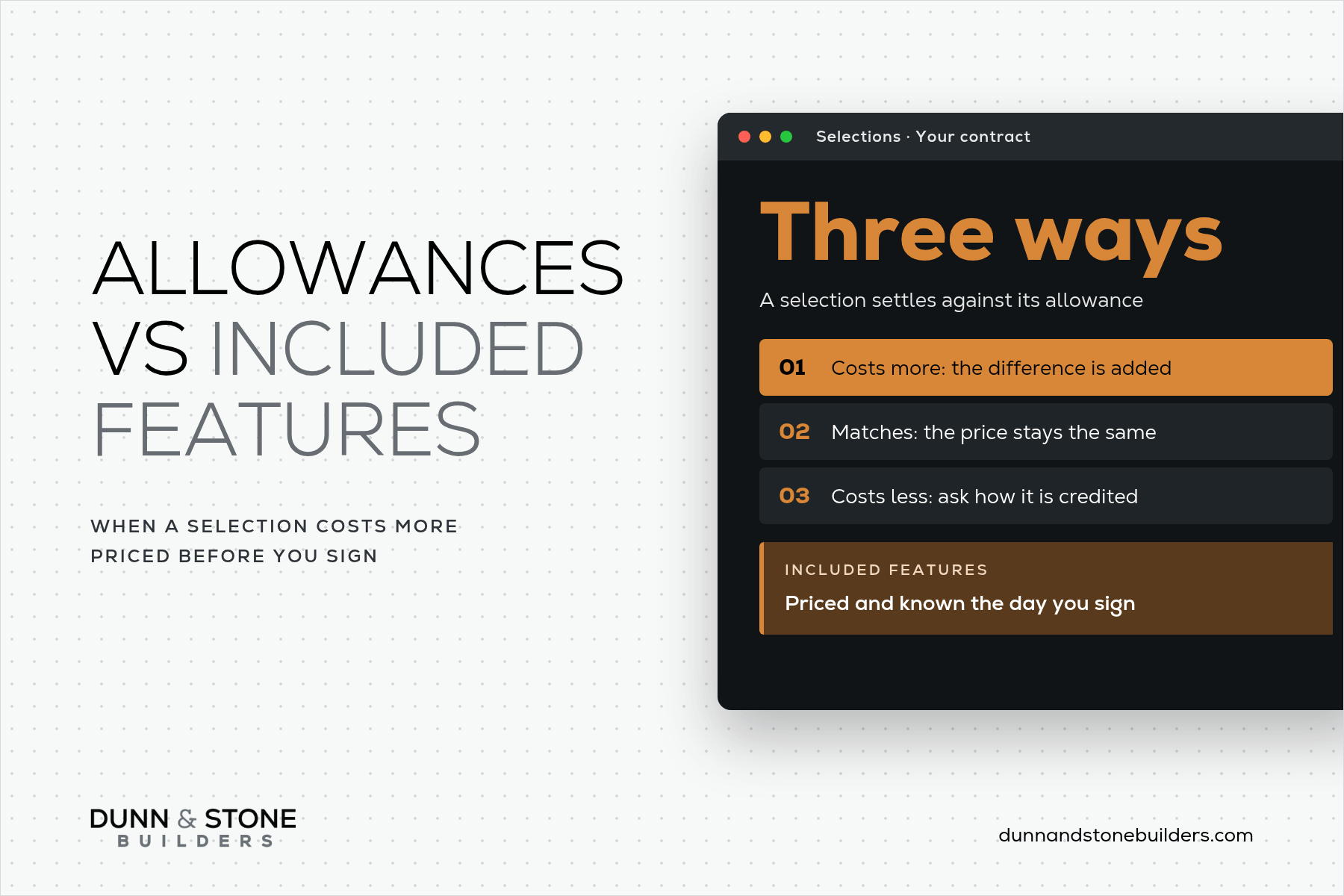
A custom home allowance is a dollar amount written into your contract as a placeholder for a finish you haven't picked yet, such as flooring, tile, lighting, or plumbing fixtures. Your selection is the actual finish you choose. If the selection costs more than the allowance, the difference is added to your price.
That gap between a number on paper and the finish you fall in love with is where many custom home budget surprises start. The good news is that it's one of the easiest gaps to plan for once you know how it works.
I want you to walk into your selections feeling confident about how that math works: what an allowance is, how it compares with an included feature, what happens when a selection costs more, and which questions are worth asking before you sign.
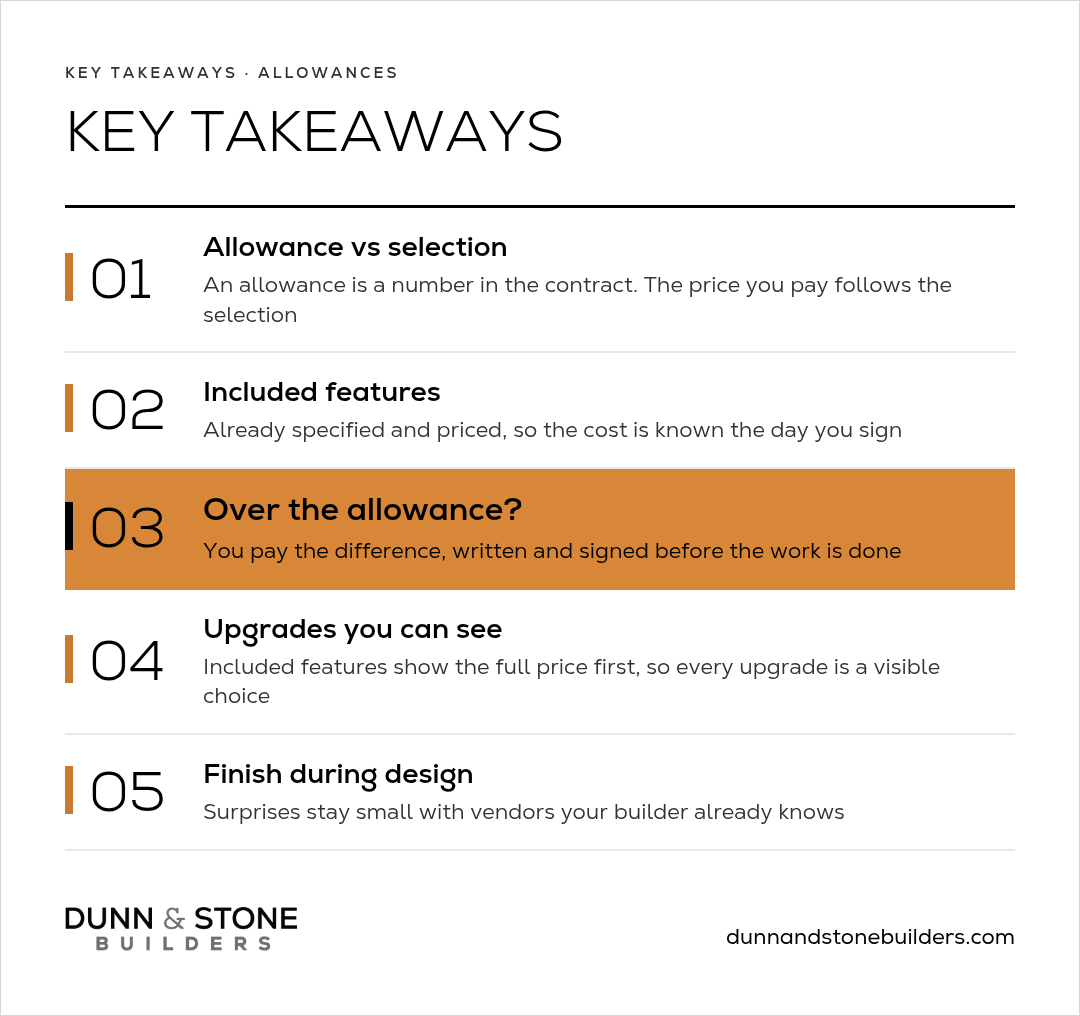
An allowance in construction is a budget line inside a building contract for a specific item whose exact product hasn't been chosen yet. The contract sets the dollar amount now, and the final cost settles once the selection is made.
Think of it as two separate things. The allowance is a number in the contract. The selection is the tile, faucet, or light fixture that actually goes into your house.
Builders commonly carry allowances for finishes that buyers like to choose themselves later in the process:
Allowances also differ in what they cover. A material allowance covers the product itself, sometimes with tax and delivery. An installed allowance also covers labor, and sometimes waste. Contracts handle this differently, so it's worth reading how yours defines each one.
To see where those lines sit inside a signed price, read what's included in a fixed-price custom home contract.
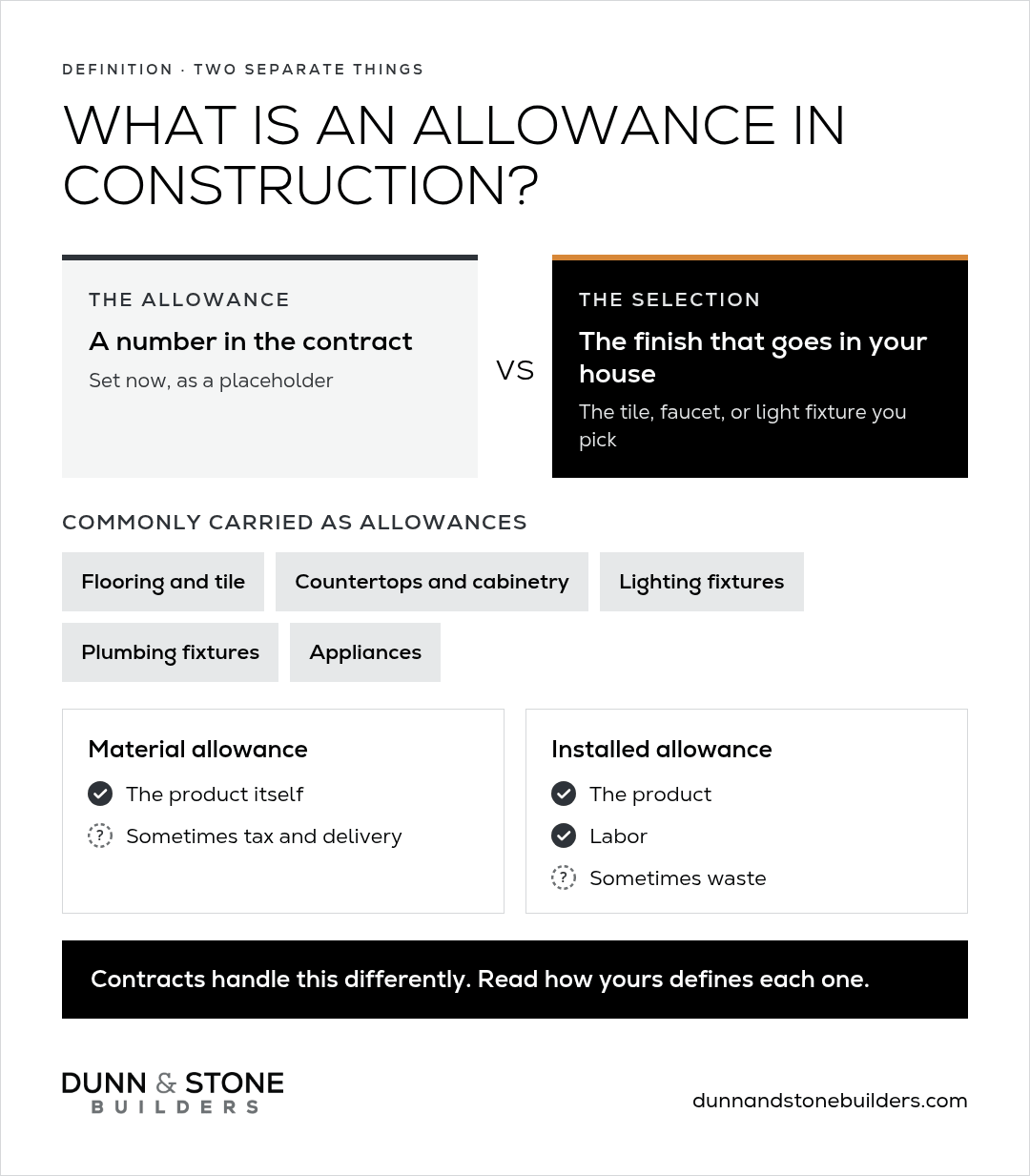
An allowance estimates the cost of a finish you'll choose later, while an included feature is a finish already named and priced in the contract. Both are honest ways to build a home. They simply settle the price at different moments.
Allowances give you room to decide later, which some families need. The tradeoff is that the final cost stays open until every selection is made.
Included features flip that order. The finish is chosen and priced first, so the number you sign already reflects it. Any change from there is your choice to upgrade, and you can see its cost before you make it.
An included-features price shows you what a complete, well-finished home costs before you start upgrading anything.
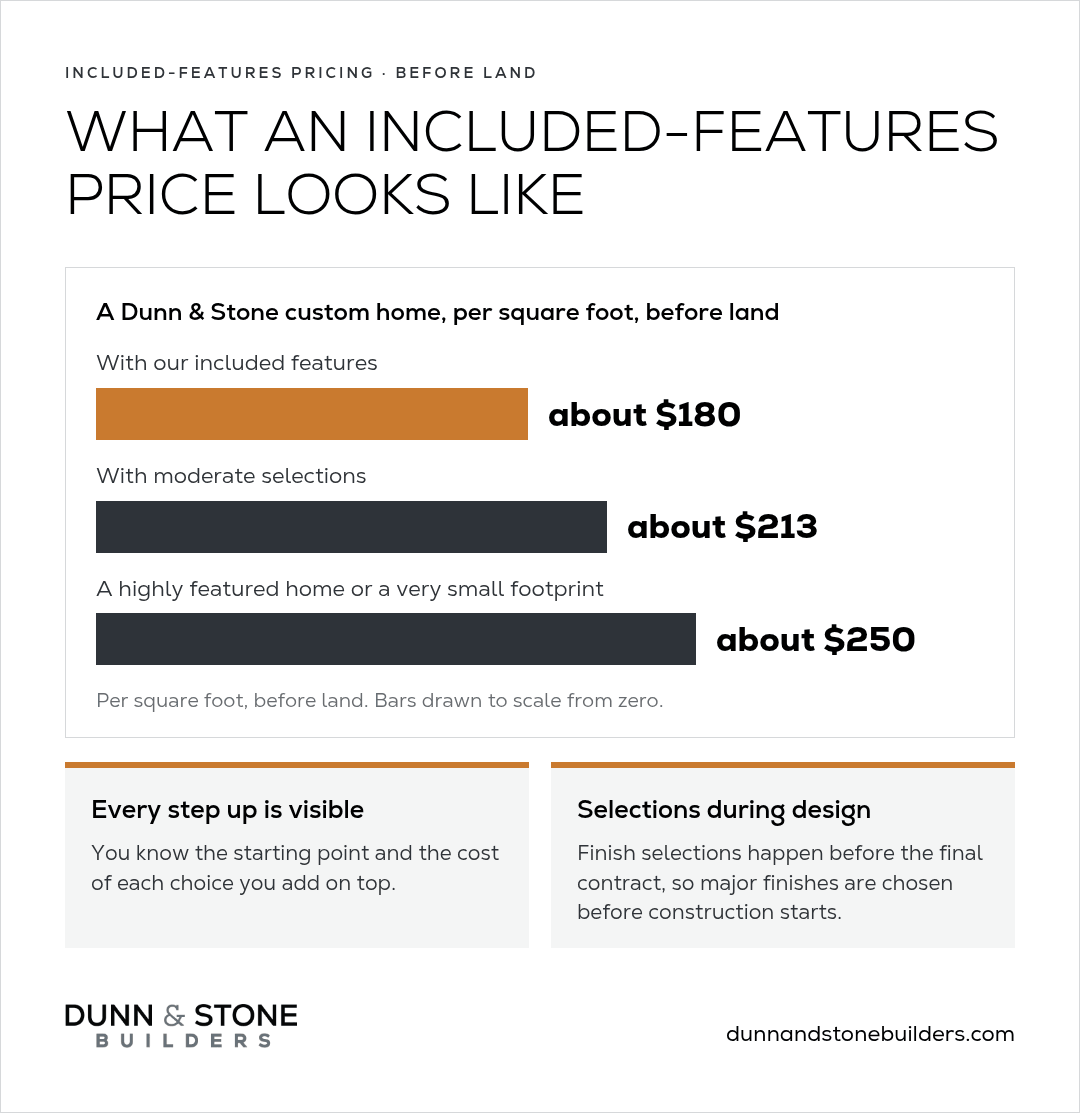
A Dunn & Stone custom home runs about $180 per square foot with our included features, about $213 with moderate selections, and about $250 for a highly featured home or a very small footprint, before land. Our cost per square foot guide walks through what moves a home between those levels.
Seen that way, every step up is visible. You know the starting point and the cost of each choice you add on top.
In our process, finish selections happen during the design stage, before the final contract. That sequence is laid out in our steps to build a home, and it means your major finishes are chosen before construction starts.
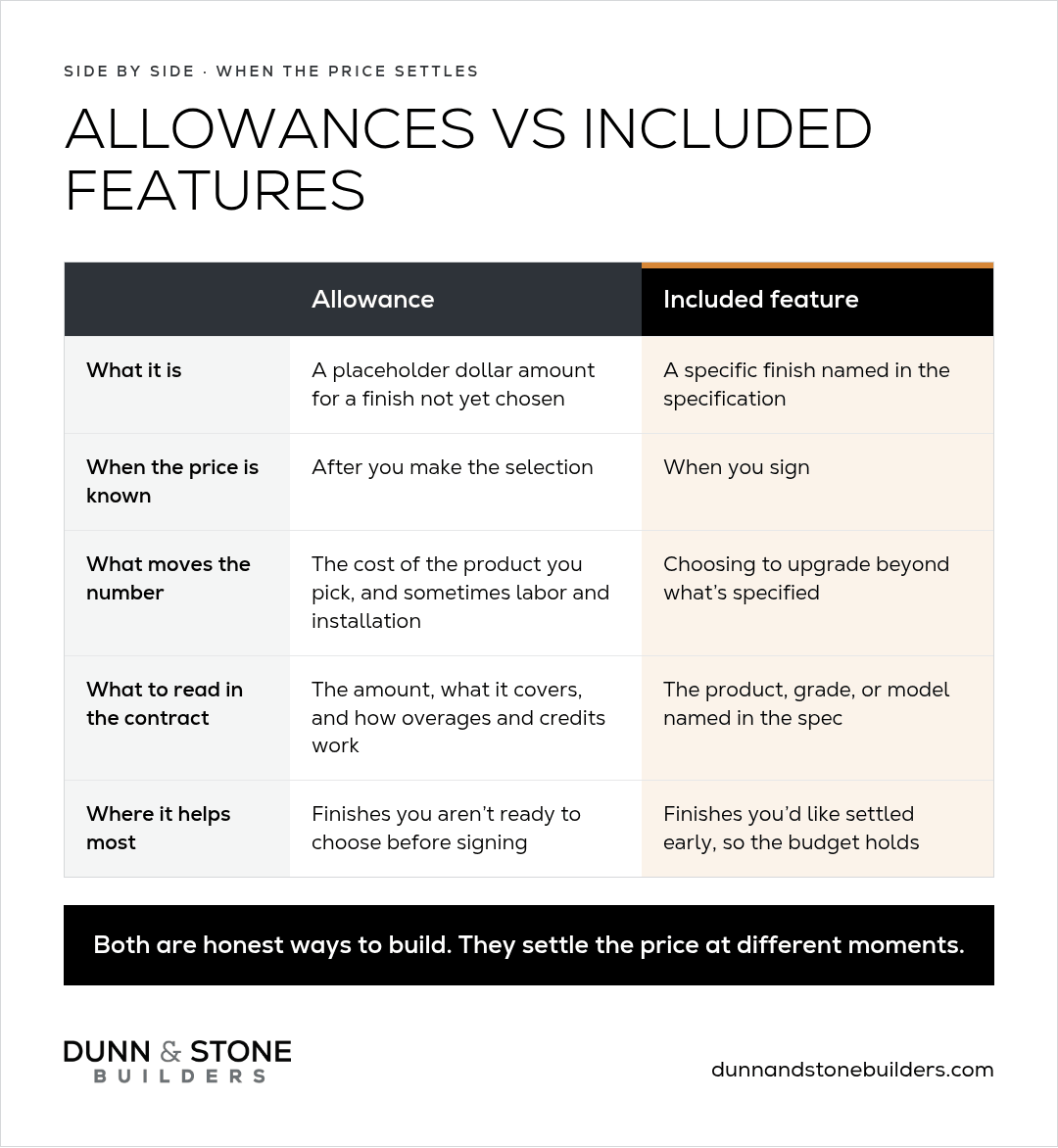
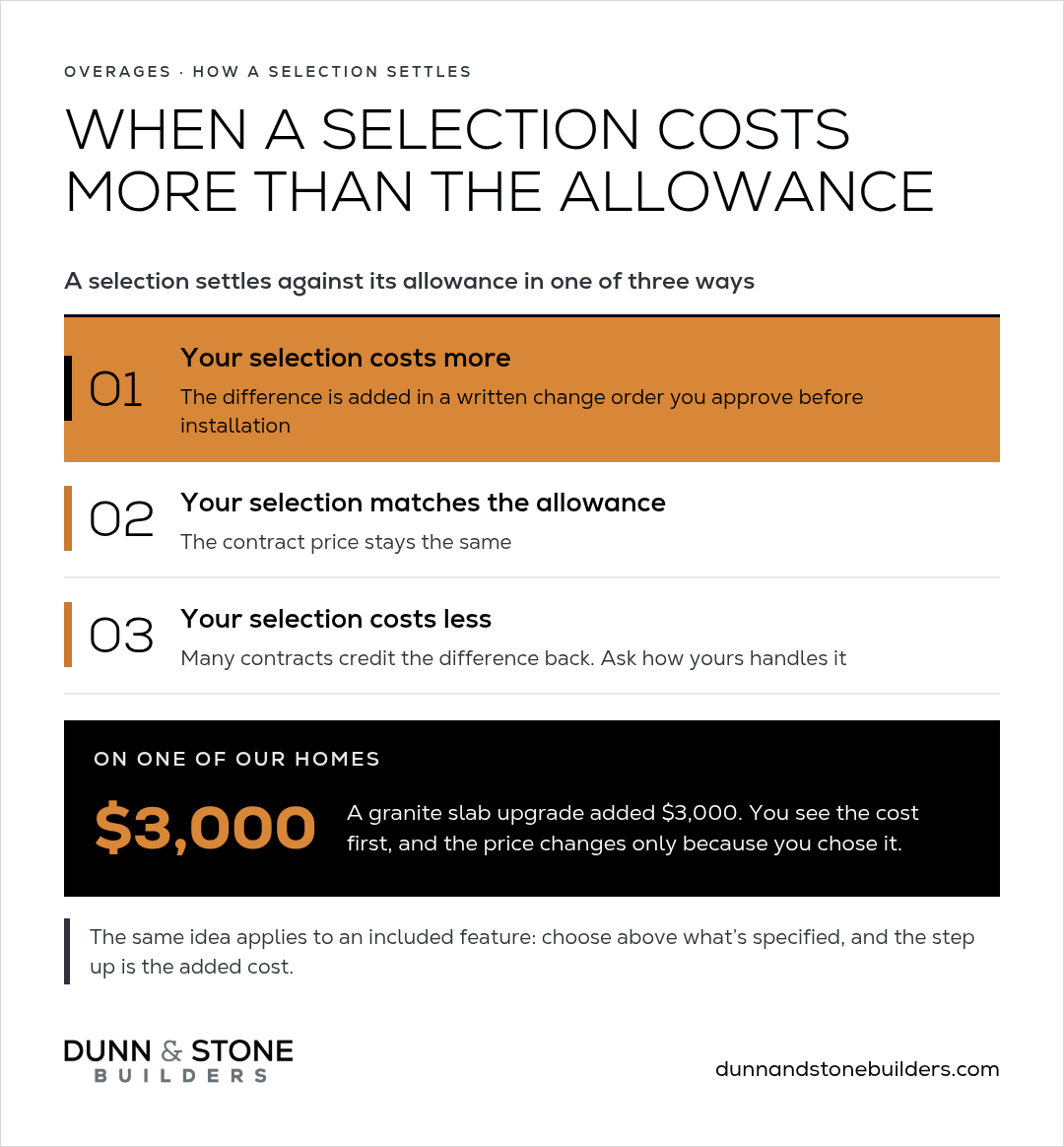
When a selection costs more than its allowance, you pay the difference between the allowance and the actual cost of what you picked. A good builder writes that difference up and has you approve it in writing before the work goes in.
A selection usually settles against its allowance in one of three ways:
The same idea applies to an included feature. If you choose something above what's specified, the step up is the added cost.
A real build shows how simple that can be. On one of our homes, a granite slab upgrade added $3,000.
That's what going over should look like. You see the cost first, and the price changes only because you chose something you wanted.
Most finish questions have an answer even when the exact product isn't on the sample wall.
Tile is a good example. We work with Daltile, one of the largest tile suppliers in the country, so when a tile you like isn't on the wall in our design center, we look at Daltile next. Most of the time, that's where we find it.
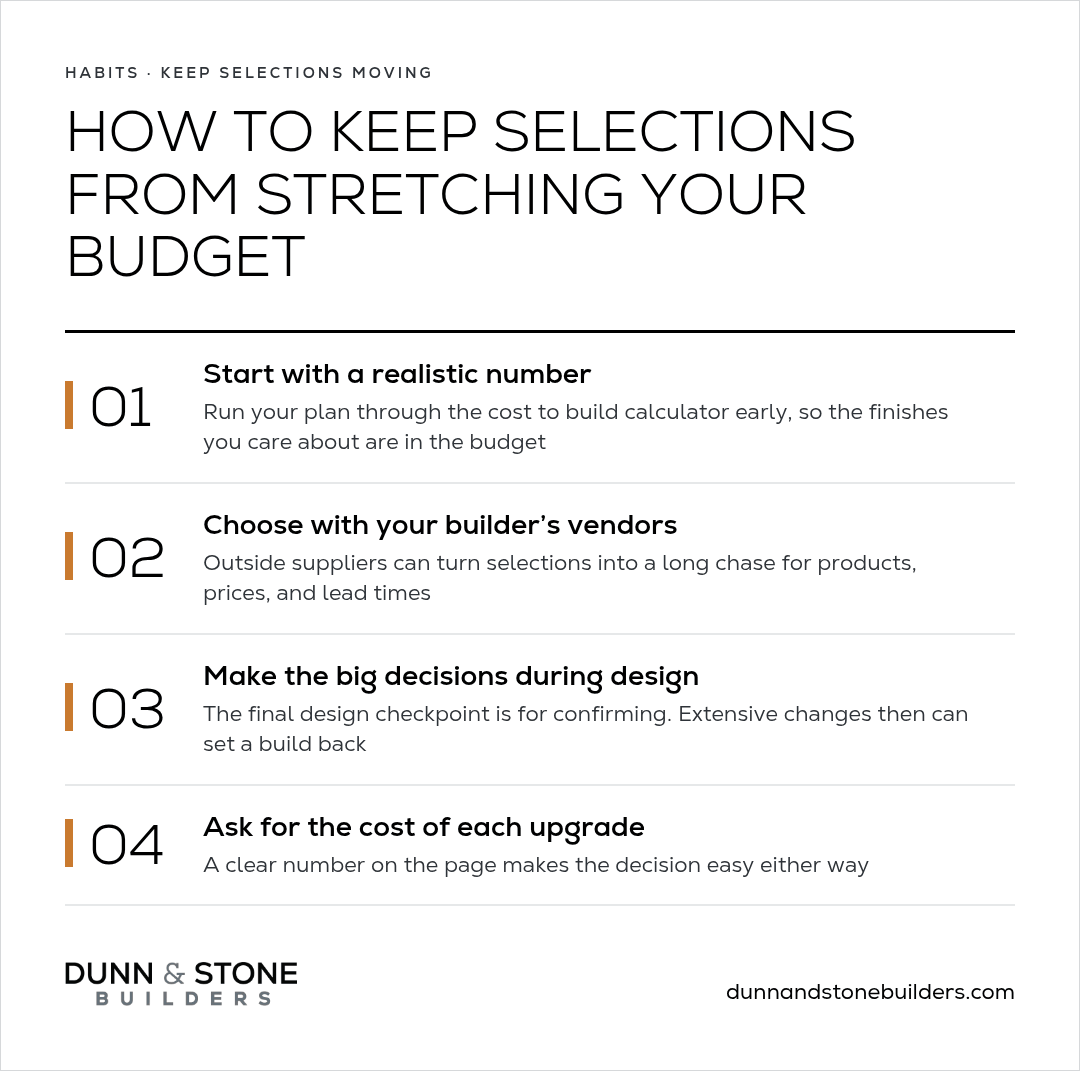
Staying with suppliers your builder already works with keeps selections moving, too. Those vendors know the products, the lead times, and the warranty, so a choice made with them settles quickly instead of becoming a long search.

A question I hear from buyers is whether they can bring their own flooring from a big-box store or a faucet ordered online and have the builder install it. It's a fair question, especially when a product looks like a great deal.
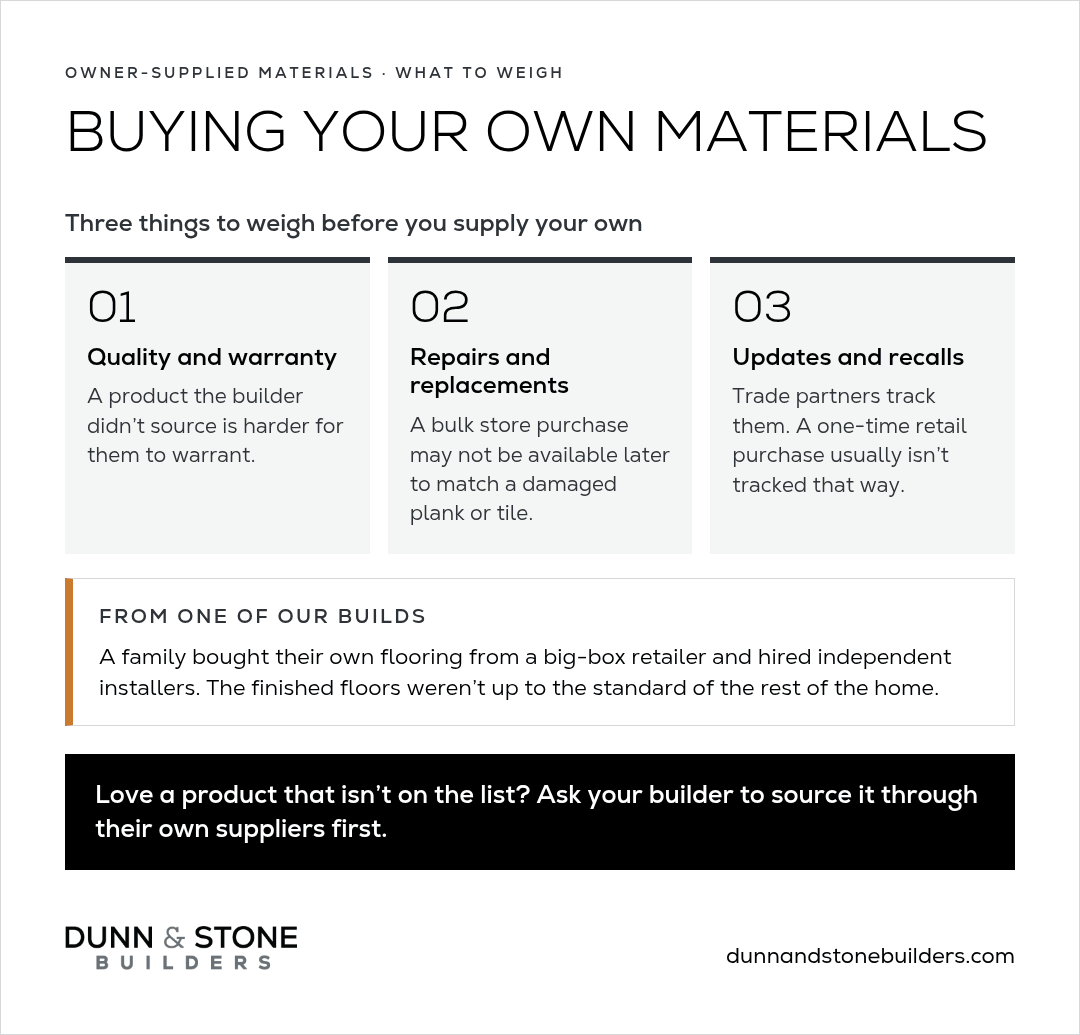
I'll share one story. A family we built for asked us to take the flooring budget out of their price. They bought their own product from a big-box retailer and hired independent installers.
When we saw the finished floors, they weren't up to the standard of the rest of the home, and we couldn't include them in photos of the house. I don't share that to fault anyone. It's one reason we source finishes through our trade partners rather than big-box stores.
Before you supply your own materials, it helps to weigh three things:
If a product you love isn't on your builder's list, ask whether they can source it through their own suppliers first. That's what we do for our families, and it often gets you the look you want with the warranty still in place.
The selection stage is one of the places I see builds get stuck, and a few habits keep it moving.
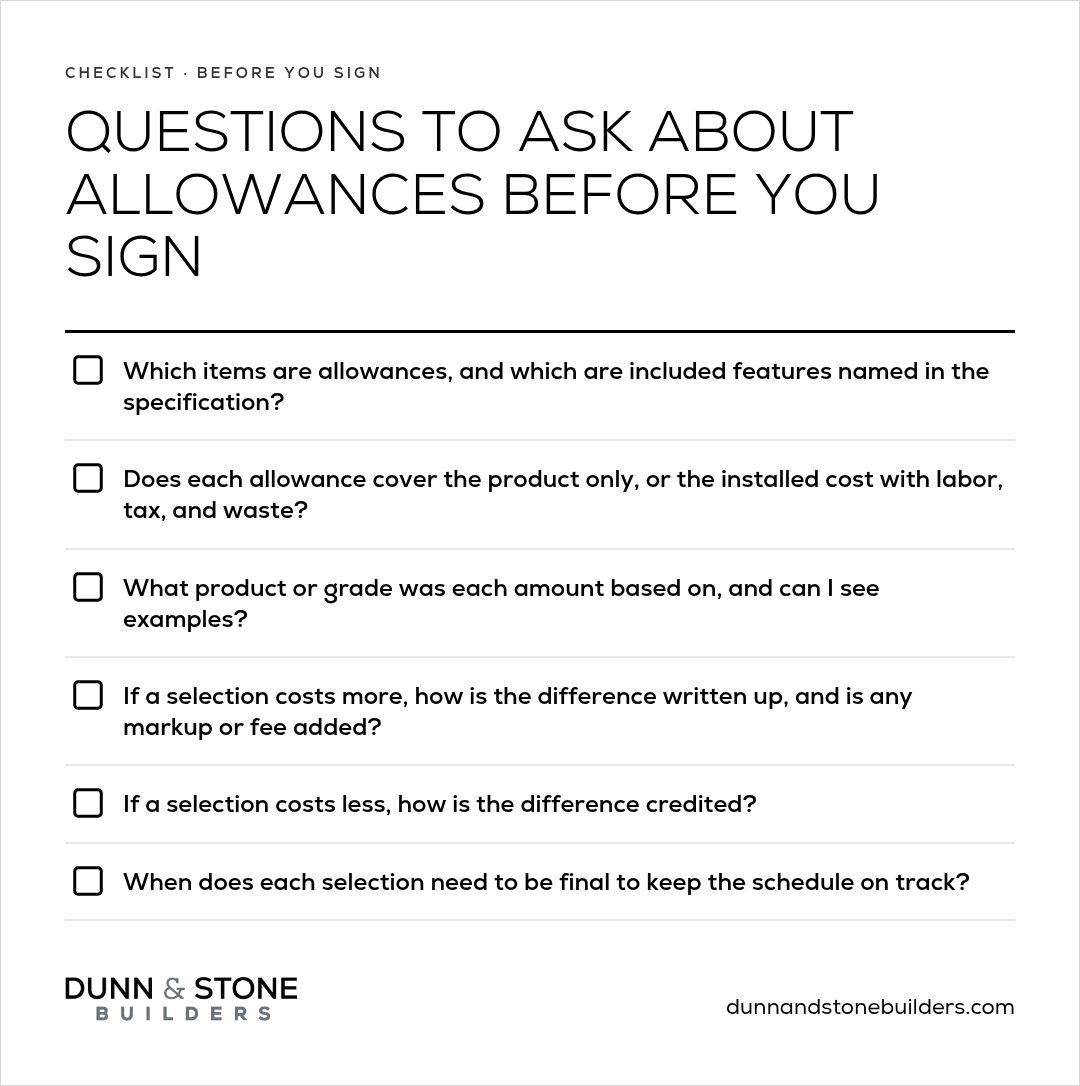
These questions help you understand every allowance in your contract.
For the full list of documents and answers to gather before you sign, see our 34 questions to ask a home builder.
An allowance in a custom home contract is a placeholder dollar amount for a finish you haven't chosen yet, such as flooring, tile, lighting, or plumbing fixtures. When you make your selection, its actual cost is compared with the allowance, and the difference is settled in writing.
An allowance budgets for an item you know you'll buy but haven't chosen yet, while a contingency is a reserve for costs nobody can predict, such as site conditions. Allowances cover finishes. Contingency covers surprises, and our guide to the hidden costs of building a house explains how a contingency plan works.
Builder allowances are a useful tool when the amounts reflect real products and the contract explains how overages and credits work. They tend to cause trouble when an allowance is set below what the finish you want actually costs, or when the contract doesn't say what it covers, so ask what each amount is based on.
A good allowance amount is one based on the actual products you're likely to choose, priced the way your builder will install them. Ask your builder which product or grade each number assumes, then compare it with the finishes you have in mind before you sign.
Whether you can buy your own materials depends on your builder, so ask before you sign. Weigh warranty coverage, whether the product can be matched for repairs later, and whether anyone tracks recalls on it. We install finishes sourced through our design center and trade partners, because that keeps all three covered.
A flooring allowance is the dollar amount in your contract set aside for flooring you'll pick later. If the flooring you choose costs more, you pay the difference, so confirm whether the amount covers material only or installation too.
Picking finishes should be one of the best parts of building your home. When you know what's included, what each upgrade costs, and how every selection settles, it stays that way.
We'd love to help you plan a home where every finish has a clear price before construction starts. Schedule a free consultation with our team, and we'll walk through your plans, your lot, and the finishes you have in mind together.


