COMPANY
Home
Where We Build
About Us
Contact Us
Vendor Inquiry

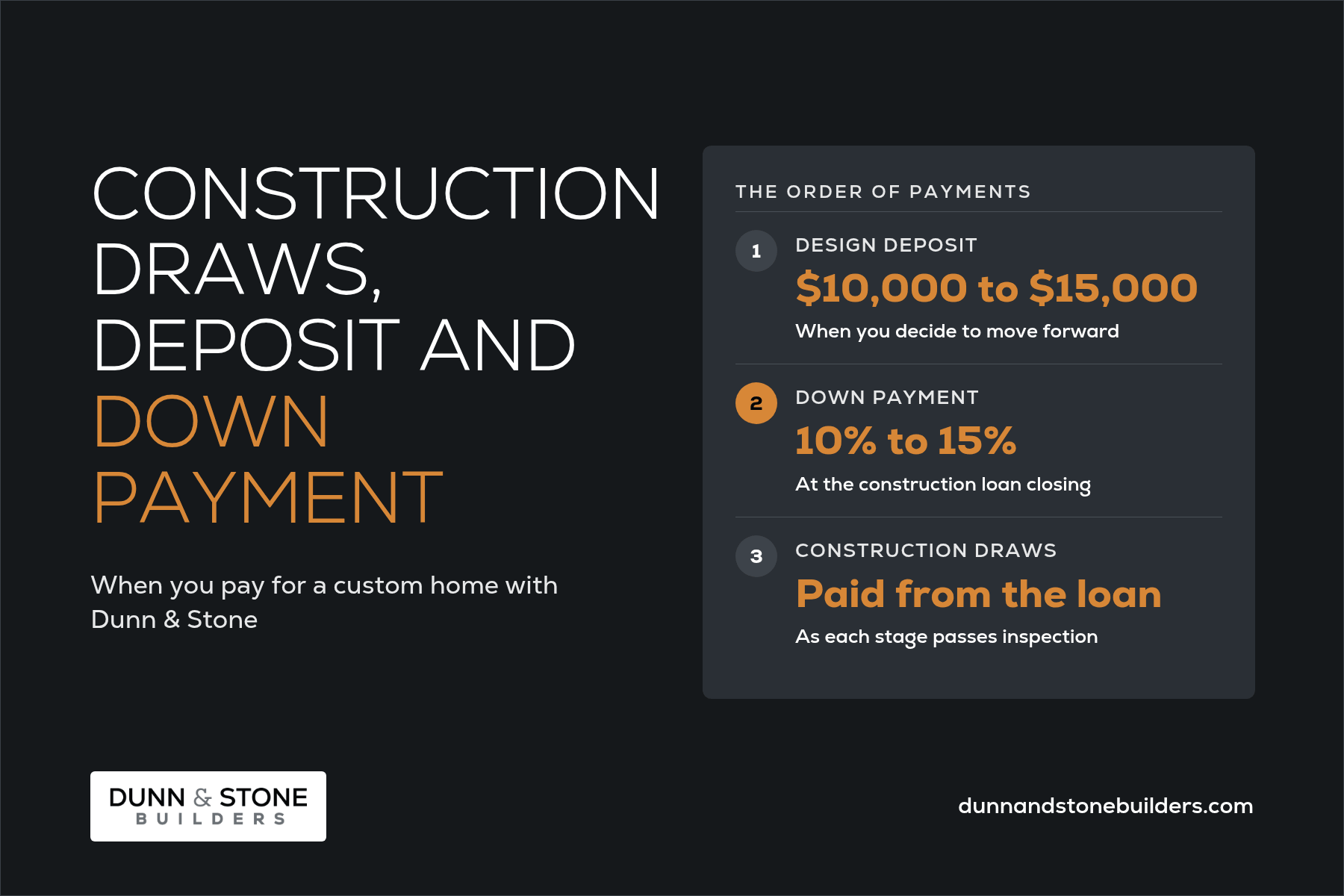
A custom home is paid for in stages. With Dunn & Stone, a $10,000 to $15,000 design deposit starts your home, 10% to 15% goes down when the construction loan closes, and the lender pays for the build on a construction draw schedule, releasing each draw as that stage passes inspection.
Most families I meet have a good sense of what their home will cost. What they want to know is when the money moves and who it moves to. Our homes usually fall between $500K and $1.5M, so knowing the order of payments ahead of time makes the whole build feel calmer.
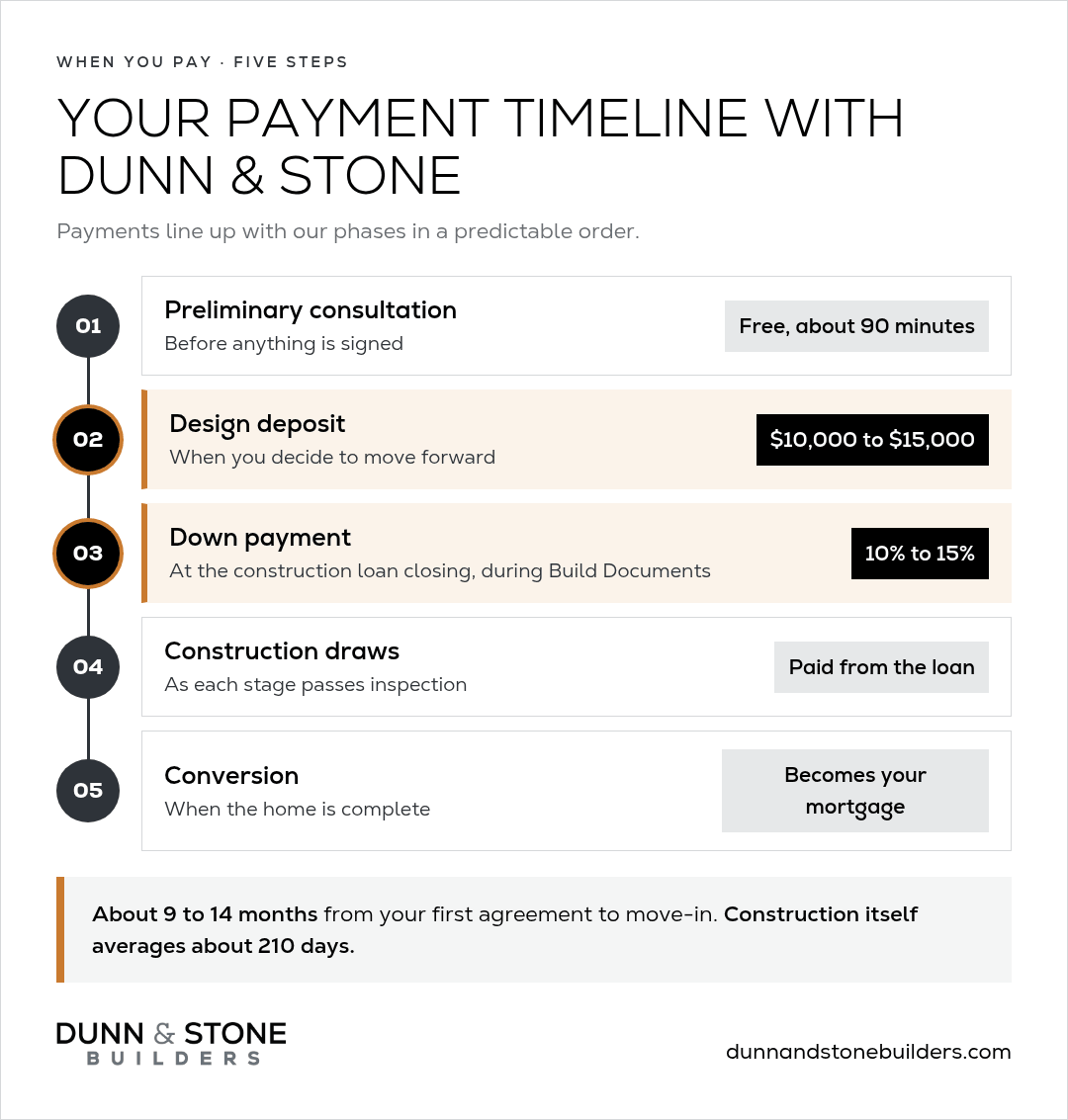
A construction draw schedule is the plan for releasing construction loan money in stages. The lender pays out each draw after an inspector confirms that stage of the home is finished.
Draws follow progress on the house rather than dates on a calendar. A draw for framing waits until the framing is up and checked, however long that takes. That's why a construction loan draw schedule reads more like a checklist than a payment calendar.
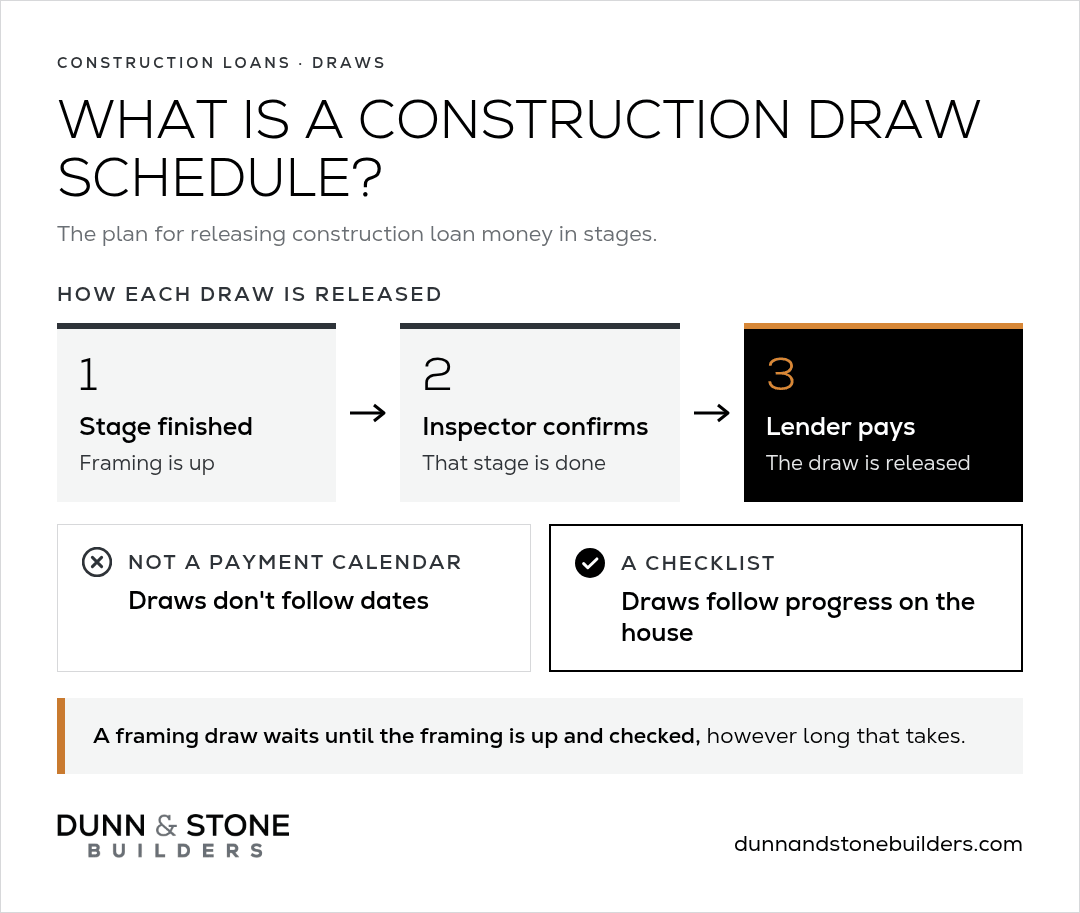
Every home we build moves through the same phases: Exploration, Design, Final Contract, Build Documents, and Construction. Payments line up with those phases in a predictable order.
From your first agreement with us to moving in, most of our homes take about 9 to 14 months. That's the full calendar. Construction itself averages about 210 days, and it starts with clearing the lot and building the pad.
Booking a consultation costs nothing, and no deposit is needed to sit down with us. The first payment comes later, once you've decided you want to build with us.
That payment is a design deposit of $10,000 to $15,000. It starts the Design phase, where we work through the floor plan, the elevation, and your exterior and interior selections.
You pay the design deposit once you decide to move forward with us. Up to that point, the consultation and the conversations around your lot and budget are about fit, and they don't lock you into a build.
The deposit opens the Design phase, so it lines up with real design work on your home.
Your fixed contract price comes after the Design phase, once your plan and selections are set. Before you sign the final contract, we'll walk through the full number with you, including how the design deposit fits into it.
Builders count deposits in different ways, so if you're comparing builders, it's worth asking each one how theirs is counted.

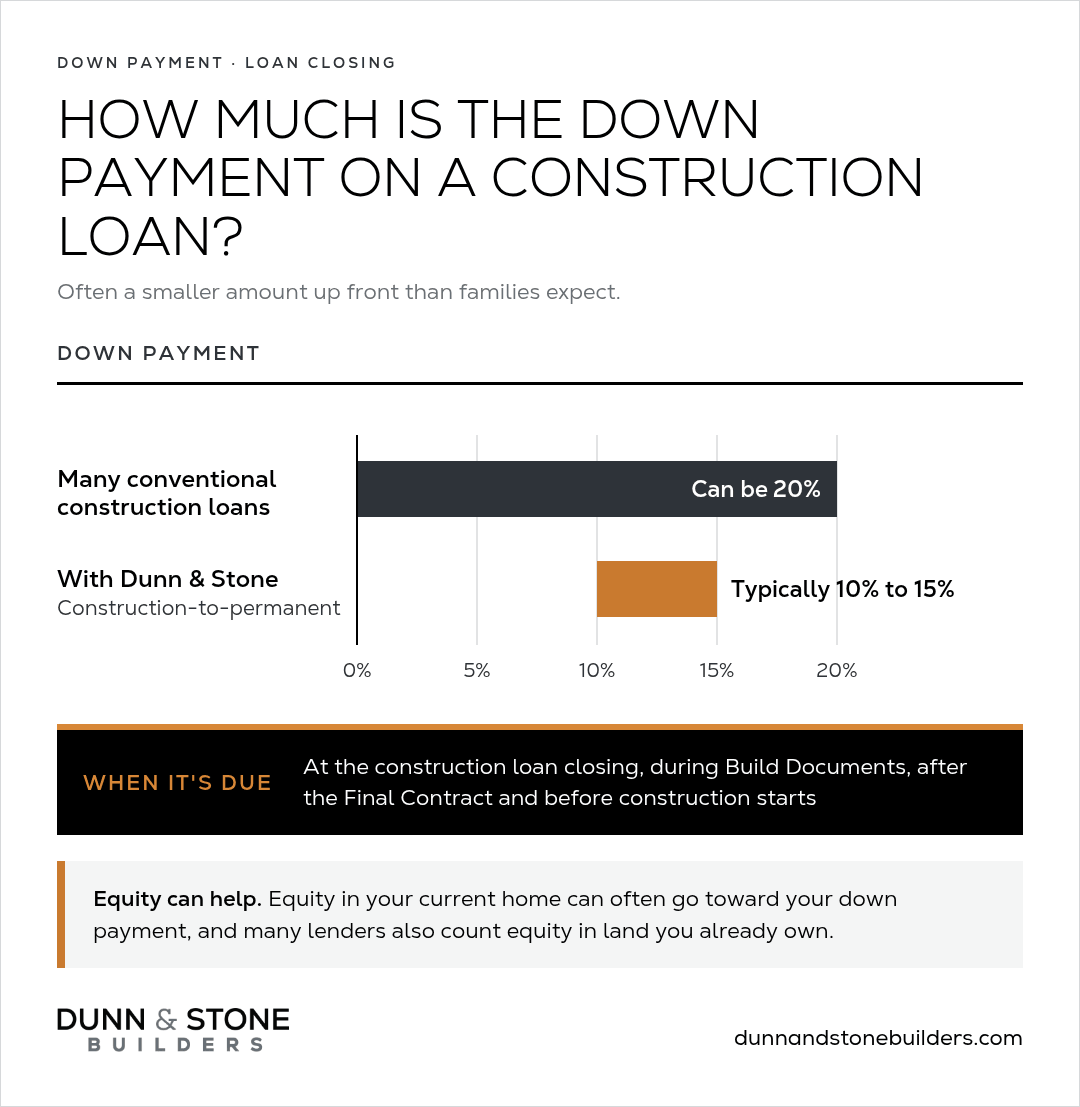
With the construction-to-permanent loan our buyers use, the down payment is typically 10% to 15%, due when the construction loan closes. Many lenders may ask for 20% down on a conventional construction loan, so this is often a smaller amount up front than families expect.
The down payment is due when the construction loan closes, which happens after the Final Contract and before construction starts. In our process, that closing falls in the Build Documents phase, alongside the survey, the soils report, the construction drawings, and the building permit.
So by the time you bring the down payment to closing, your design is finished and your price is set in the contract.
Equity in your current home can often go toward your down payment. Many lenders also count equity in land you already own, so it's worth asking your lender how they'll treat your lot.
Once the loan closes, the lender holds the construction funds and releases them in draws as the house goes up. You don't write a check to the builder at each stage. The lender pays for work that has been completed and confirmed.
A change you ask for after signing works a little differently. We settle that change order with you, signed and paid for, before the changed work starts.
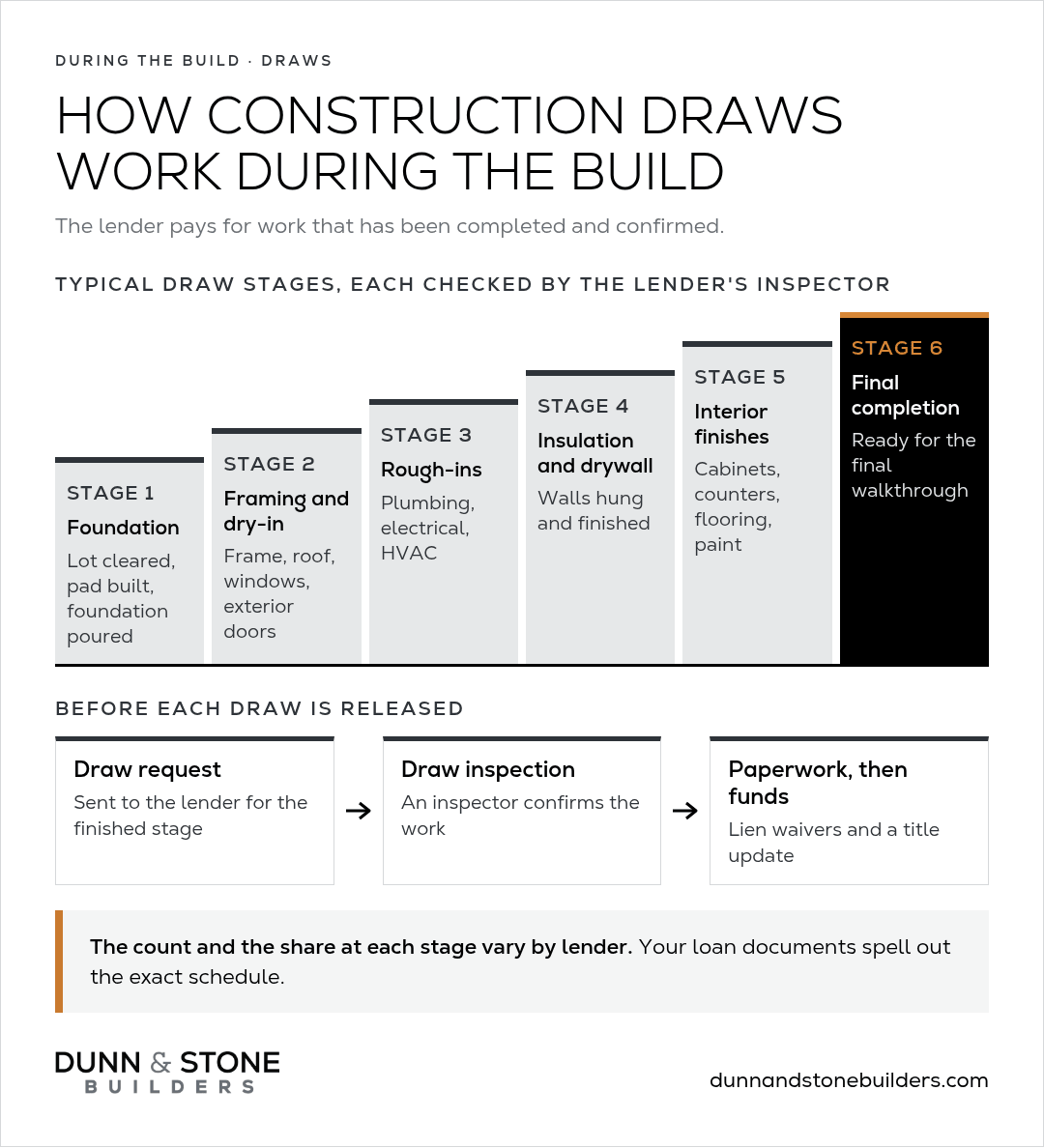
Most residential lenders tie draws to a similar set of milestones. The count and the share of the loan at each stage vary by lender, and your loan documents will spell out the exact schedule.
These stages follow the same order our crews build in: foundation and framing, the exterior shell, mechanical systems, interior finishes, and the final walkthrough.
Before a lender releases a draw, three things usually happen:
Lien waivers matter more than they look. They show that the people who did the work at that stage have been paid, which helps protect your home and your lot from liens later.
Timing depends on the lender's inspection schedule and how quickly the paperwork comes together. A clean draw request with complete paperwork moves fastest, because the inspector and the lender have everything they need in one pass.
The last draw comes when the home is complete and has passed its final inspection. Some lenders also hold back a share of each draw, often called retainage, and release it once the work is complete.
With one loan and one closing, the construction loan converts to your permanent mortgage when the home is complete. There's no second closing at the end of the build.

Draws work best when the number behind them holds steady. We build on a fixed-price contract, and our goal is that the number in your final contract is the same number at your final closing.
That's why we select everything with you before the contract, so the draws fund the home you designed. Site items that are easy to overlook, like orange fence, silt fence, dumpsters, and portable toilets, are part of our price, so they don't turn into cash you need at closing.
Some lot prep is built into our base price. Longer driveways and sloped lots that need imported fill can raise it, and we price that for your specific lot during Exploration, well before your down payment is due.

A typical residential draw schedule releases loan funds at a series of milestones, such as the foundation, framing and dry-in, rough-ins, drywall, interior finishes, and final completion. Each draw is paid after an inspector confirms that stage is done, and the exact count depends on the lender.
The down payment is due when the construction loan closes, which gives you a clear point to plan around. On a Dunn & Stone home, that closing happens during Build Documents, after your final contract is signed and before construction begins.
A design deposit of $10,000 to $15,000 starts your home with us once you decide to move forward. The first consultation is free and doesn't require a deposit.
We'll walk through exactly how the design deposit fits into your fixed contract price before you sign the final contract. Your fixed price is set after the Design phase, so you'll see the full number before anything is final.
Equity in your current home can often go toward your down payment, and we'd be glad to talk through your options. Many lenders also count equity in land you already own, so it's worth asking your lender how they'll treat yours.
It's natural to want to know when each draw will land, and the answer depends mostly on your lender. The time from a draw request to payment follows the lender's inspection schedule and how quickly the paperwork, such as lien waivers and a title update, comes together.
Knowing when each payment comes makes it easier to enjoy the part that matters, watching your home take shape. We'd love to sit down with you, look at your lot and your plans, and walk through the full timeline for your home.
Schedule a free consultation and we'll start with your goals, your budget, and how you want your home to live.


