COMPANY
Home
Where We Build
About Us
Contact Us
Vendor Inquiry


For most new construction buyers, a third-party home warranty is not worth it in the first two years. Your builder's warranty already covers defects. Every new appliance still carries its own manufacturer's warranty. A paid home warranty mostly repeats coverage you already hold.
That changes later, after those warranties expire, or in a few specific situations.
I handle warranty and after-close service at Dunn & Stone. I started as a contract trim carpenter in 1984. I have run the post-close side at Dunn & Stone full time since 2014. Dunn & Stone has built over a thousand homes since 1999.
My job is to catch problems early and meet clients at their homes until the work is right.
So the warranty question reaches me often. It usually comes from buyers asking whether they need a separate plan on top of what we already give them. Here is how I answer it.
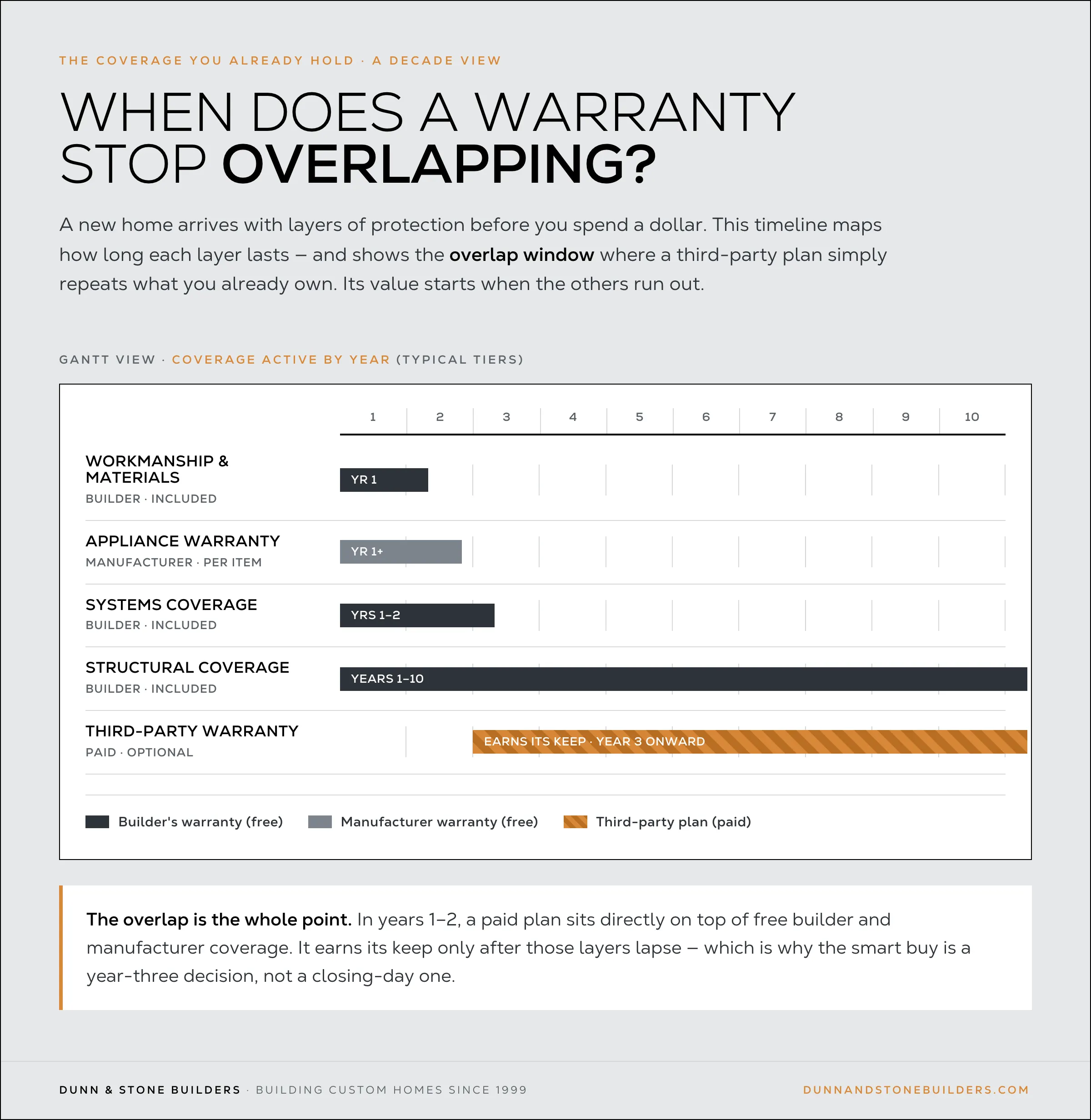
These two get mixed up constantly. A builder's warranty comes with your new home at no cost. It covers construction defects in workmanship, systems, and structure. A third-party home warranty is a paid service contract you buy separately. It covers breakdowns from normal wear on appliances and systems.
The FTC's guide to warranties for new homes draws the same line. A builder warranty comes with the home and covers permanent parts like plumbing and electrical. A home warranty is a service contract that costs extra and usually applies to existing homes.
On a brand-new home, the two overlap heavily for the first couple of years.
Builder's warranties are usually tiered. Coverage for workmanship and materials commonly runs one year, with systems covered longer and structural elements the longest. Our specific coverage tiers are spelled out in our guide to new construction warranty coverage.
Many builders also carry a third-party structural warranty backstop behind the long-term structural coverage. We can confirm the exact provider for Dunn & Stone if you would like those details.
When something comes up, you call or text us, whatever is easiest. There is no claim portal and no outside adjuster deciding what qualifies. I come out, look at it, and show you what falls under warranty and what does not.
A new home arrives with protection built in, before you spend a dollar on a separate warranty.
This is why the decision shifts for a new build. A third-party warranty earns its keep on an aging furnace or a ten-year-old dishwasher. On a new home, those parts are new and already covered.
Take HVAC, since it drives a lot of warranty searches. A new system carries its own manufacturer warranty. We install a two-stage HVAC system as standard, built for the Houston climate, and it is covered from day one. If you want the detail on whether a home warranty covers HVAC repairs, we walk through it separately.
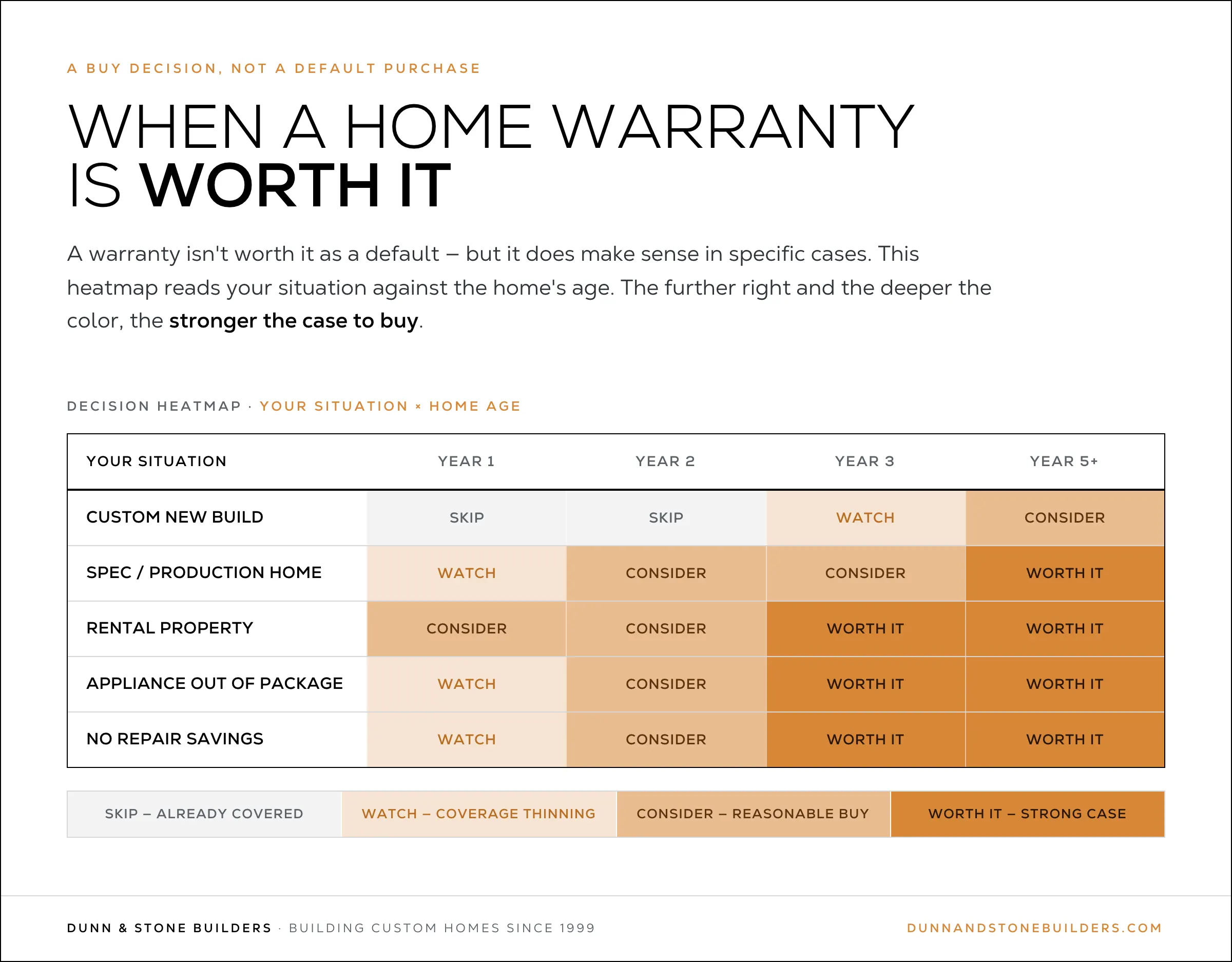
A home warranty starts to make sense for a new construction buyer in specific cases, not as a default purchase. A few situations move it from a waste into a reasonable buy:
If you reach that point and want to compare options, our guide to the best home warranty companies in Texas breaks down what to look for.
This is the strongest case for buying one. Once your year one and year two coverage lapses, a warranty can offset wear on systems that are a few years old. Treat it as a year-three decision, not a closing-day one.
Do you need a home warranty on a new construction home? Usually not in the first one to two years. Your builder's warranty covers defects, and your new appliances sit under manufacturer warranty. A paid plan repeats protection you already have. Most new buyers can wait.
The friction is real once you read the fine print. Plans cap their payouts. They depreciate the value of what they replace. You pay a service fee for every visit, even when a claim gets denied. Consumer Reports recommends putting that money into a dedicated repair fund instead, pointing to the exclusions, payout caps, and denials that limit these plans.
On a new home, that denial risk runs higher early on. Anything defective is our responsibility as the builder, not the warranty company's.
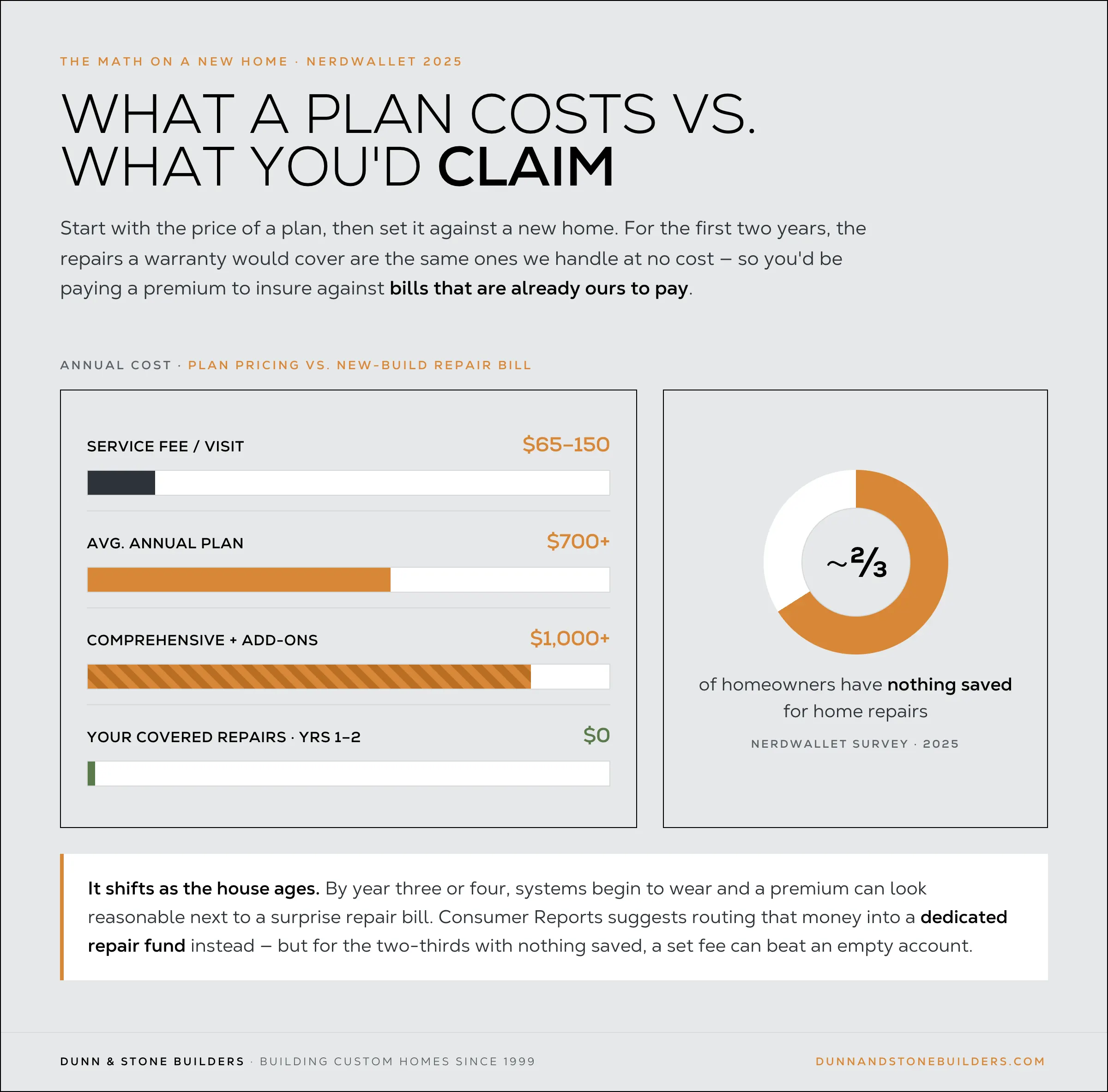
Start with what a plan costs. NerdWallet's 2025 analysis put the average plan over $700 a year, plus a service fee of $65 to $150 for each visit. Comprehensive plans with add-ons run higher, into four figures.
Now set that against a new home. For the first two years, the repairs a warranty would cover are the same repairs we handle at no cost. You would be paying a premium to insure against bills that are already ours to pay.
That shifts as the house ages. By year three or four, systems begin to wear, and a warranty premium can look reasonable next to a surprise repair bill.
A warranty of either kind exists for failures, not for upkeep. Routine maintenance stays on you, no matter which plan you hold. Filter changes and seasonal upkeep are never warranty items, on our side or a third-party's.
Cosmetic wear and damage you cause fall outside coverage too. Third-party plans add their own exclusions, like pre-existing conditions and anything they judge to be an improper install. Some items surprise people, so it helps to know what a home warranty covers on windows and similar gray areas.
Knowing the line between a covered failure and normal upkeep keeps you from paying for a plan that was never going to cover the work.
These are not the same product, and the mix-up is common. Homeowners insurance covers sudden damage from events like fire, storms, or theft, and lenders usually require it. A home warranty covers breakdowns from normal use, and it is always optional.
Insurance protects against disasters, while a warranty pays to fix things that wear out. A new home needs insurance, and it rarely needs a warranty in the first couple of years.
During the build itself, the relevant coverage is different again. That phase is handled by builder's risk insurance, not a homeowner's warranty.
How we run warranty shapes whether a third-party plan adds anything for our clients. We service every claim ourselves. We do not sell warranty upgrades or add-on packages, so there is no tier for anyone to upsell you.
My role is to look for trouble early. I would rather catch a problem in the first months and improve how we build than have it surface years later. If a client reaches out, I meet them at the house and walk through what is covered. No red tape.
For a new owner, that means most of what a third-party warranty advertises is handled before you would ever file a claim.
On a new custom home, you already hold the coverage a home warranty sells. The builder handles defects, and the manufacturers cover the appliances for years.
Revisit the question around year three, when that coverage starts to thin. That is the point where a warranty can pay for itself.
If you are weighing a build and want to know how we stand behind it after closing, schedule a free consultation and we will walk you through it.
Usually not in the first one to two years. Your builder's warranty covers defects, and your new appliances carry manufacturer warranties, so a paid plan repeats protection you already hold. It becomes worth a look once that coverage starts to expire, generally year three onward.
No. A home warranty is optional and never legally required. Your lender may require homeowners insurance, which is a different product. Some sellers include a warranty as an incentive on resale homes, but you are never obligated to buy or renew one.
No. Homeowners insurance covers sudden damage from events like fire, storms, or theft, and lenders usually require it. A home warranty is an optional service contract for breakdowns of appliances and systems from normal wear. They cover different risks and do not replace each other.
It depends on what the builder installed. Appliances in your build are covered first by the manufacturer's warranty, then by the builder for installation issues. At Dunn & Stone, our first year is comprehensive, and you reach us directly for any issue instead of filing a third-party claim.
A new HVAC system is already under its manufacturer's warranty, so a separate plan adds little in the early years. We install a two-stage system as standard, built for the Houston climate and covered from the start. A third-party HVAC warranty makes more sense once those terms run out.
The decision point is usually year two or three, not closing day. Wait until the builder's systems coverage and the appliance manufacturer warranties begin to lapse. Buying earlier means paying for coverage that overlaps what you already have.

.webp)


